Micky Neilson Interview

The following interview was between TigerChainsaw and legendary video game writer, Micky Neilson. His career spans over two decades in the video game industry and helped shape the dominant gaming giant that is Blizzard Entertainment. He is also a two-time New York Times Best-Selling Author. This specific interview is dedicated to his work on the Blackthorne in 1994 for the Super Nintendo where he helped write, design, and test.

TigerChainsaw = TC

Micky Neilson = MN

TC: “You’ve had an amazing career in writing whether it was through video games or authoring books. What first got you into writing and fiction in general? What made you want to pick up that career?”

MN: “I had been interested in story telling since the time I was a kid. I’m a visual story-teller. My head is always in the clouds and I’m always thinking about different worlds, fantastical settings, and things like that. From an imaginations standpoint I was already there but what I didn’t understand was the mechanics of writing and that was something that I needed to learn. As a child I wasn’t in a situation to get a great education so a lot of it was self-taught. I knew I wanted to be a writer and when I was a kid I had this book and took it to my dad. Inside of the book was the publisher’s name but I thought it was the writer. I pointed to it and asked who it was and he said it was Whitman. I then told him I wanted to be Whitman and what I meant was that I wanted to be the writer. Later I had an opportunity with my buddy Samwise (Didier) who was an Art Director at Blizzard. He was one of the first people there when the company started. It wasn’t even Blizzard at the time, it was Silicon and Synapse. It was just these college guys who had put together this company to make some games. They had a lot of dreams and ambitions but it was tiny as everyone could fit in one room. Sam was doing art and he called me while I was in the military. I had recently been in a truck accident and he asked if I’d like to do art. I thought “Oh okay, art for video games? That sounds great!” so I got out of the military and I went there and worked day and night on his computer. You’re doing video game artwork back then with no 3D or tablets. You’re using a mouse with these gigantic pixels to try and create art. If you look at the art in Blackthorne, that’s a lot of what it is. It’s a very pixelated art, but there’s a technique to that. So I took the test to learn all of these techniques and got hired on.”

TC: “When did you arrive at Blizzard? Was it 1993 and had they changed the name yet?”
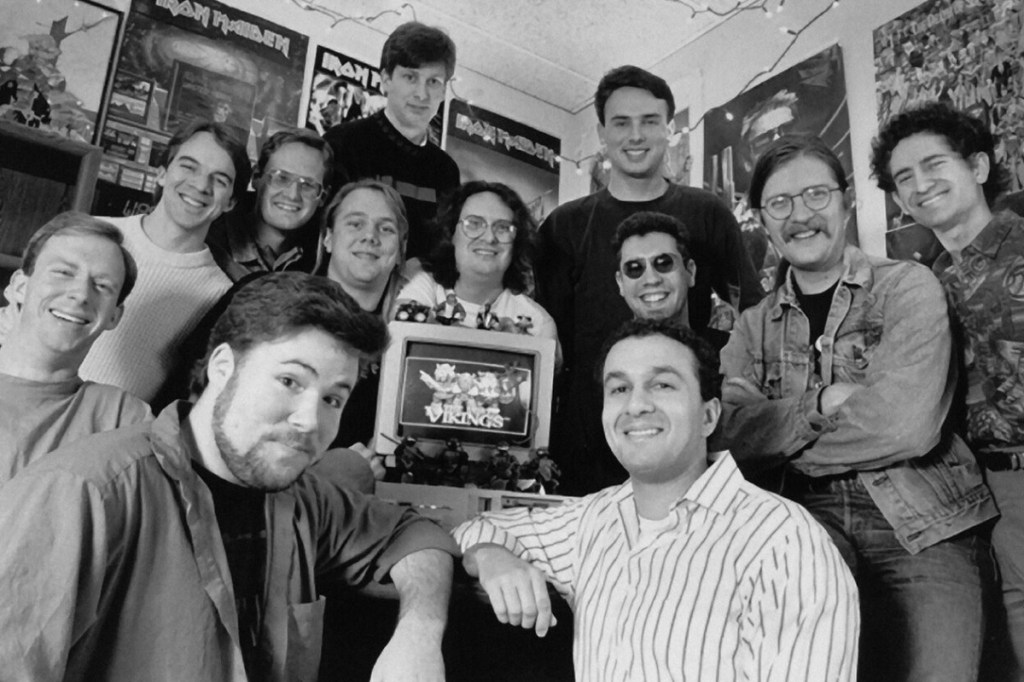
Micky Neilson (Top of the picture) and the team at Blizzard.

MN: “I started in October of 1993 and when I was training I believe it was still called Silicon and Synapse. During the time I was training there was this weird little period where Silicon and Synapse went from that name to Ogre Studios. This is the time where Davidson & Associates purchased the company. At the time, the three founders of Blizzard, Michael Morhaime, Allen Adham, and Frank Pearce and the company itself were in a difficult position. With Davidson getting ready to acquire the company, we weren’t sure what the future was going to be and they were paying paychecks with their credit cards. We didn’t know what was going to happen or how it was going to go but we knew Davidson was going to acquire the company. When a small company like that gets acquired it can be a scary thing because you just don’t know what’s going to happen. Around that same time we started working on Warcraft and what that was going to be and brainstorming the very early stages of that. It was a weird time but Davidson allowed the company to remain autonomously. They really just let us do our thing, but their thing was educational software, so their thing wasn’t video games per say but they did know there was some type of magic going on within this little company and they invested wholeheartedly into it. Obviously, it worked out well.

TC: “So the actual game of Blackthorne, how did the concept come to be? Did you come up with the story first and then present it to the team or was the gameplay concept presented to you and you started to write the story?”

MN: “The story was pretty much done as far as the concept and setting. There was gameplay already when I started on it. The first thing that I started doing during lunch was just play it. I would look for bugs and play through the latest levels. When I came on I believe the story was a very collaborative thing. I don’t remember them telling me exactly how the story came about but with Sarlac and Tuul I think that was all group thinking. Where I came in was the art, I was actually working on Justice League Task Force and animations for that. I wanted to get into the story and something that I’m not sure a lot of people know about especially if they didn’t work on video games at that time is that with a small company everybody does a little bit of everything. The artists would learn whatever they could learn to help the game get finished. One of the things that I felt was a strength and also something that I was interested in was story-telling and writing so I had the opportunity to jump in and help create the NPC dialogue. Everytime you pass one of those captives who are hanging by a chain on the wall and they say something with a little interaction, that was what I was writing. It was a small contribution but it was the first time I wrote anything before in a video game. In that sense, Blackthorne has a really special place in my heart for beginning my writing especially because after 10 years of doing artwork for Blizzard and moving into 3D I had the opportunity to transition into a department called “Creative Development” and that’s where I moved into story development full-time. That’s where my writing career really took off.” 

TC: “Can you describe to me what your workspace was like back in 1993? What do you remember about the offices of Blizzard and what was the overall atmosphere? Help transport us to your desk during that time period.”

Micky Neilson (Third one up) and the guys at Blizzard.

MN: “A lot of people shared offices. I think maybe only the founders at that point had their own. You basically had this big open area like a bullpen and you had offices lining the periphery of that space. So you throw a bunch of artists in together and start blasting Jerky Boys and we all were watching Beavis and Butthead. We were just a bunch of kids. At lunch time we were either playing Samurai Shodown or running around grabbing Taco Bell. A lot of the artists, but especially the programmers would play Magic: The Gathering as that was a big thing. In that open bullpen area, most of the time at lunch there were people sitting around the walls and they all had their Magic cards. Obviously we were all playing games too, we played lots of Doom around that time and Duke (Nukem) so we were running around blasting the crap out of each other. It was just a lot of fun, I mean what more could you ask for as a kid at that age who was into comic books. We were all into the same stuff, everybody was geeky, and into fantasy, sci-fi movies, and comic books. Everybody speaks the same language and when you’re in a company and working on a team there’s a shorthand that you develop when you speak “geek”. As long as everybody was speaking geek, everybody understood exactly where the other person was coming from. It’s like “I’m working on this background and I need it to be more like Geiger stuff from Alien” and I’d understand 100 percent of what they were saying. It was fun, it was such a blast.”

TC: “What’s your creative process like for writing? Is it the same every time or how does the story come to you?”

MN: “Stories can come from anywhere. Sometimes it’s just a thought that pops into my head, sometimes I can be inspired by something I’m watching or a book that I’m reading. Of course when we start talking about licensing projects, people can come to you and tell you they have this project and offer you work. That was one of the big things about working at Blizzard because I loved being able to work on those worlds but they were never my worlds. I didn’t really have ownership, I was just kind of taking that space to a certain extent. Which was fine, it was great because I understood those worlds inside and out so I was able to bring a little bit of my own voice to that. I enjoy creating my own ideas but I do like to collaborate too. When I collaborate with other people we’ll just talk and I’ve found that I do my best work when I’m bouncing ideas off other people and that’s true for video game story development as well. If you get creative people together, like-minded people together, who are able to work together you can get a lot done and make a lot of progress. Good ideas can come from anywhere. I get lost when I’m driving because my brain is off in La-La Land thinking about story stuff.” 

TC: “When the game was finished and released what was the reception around the office about it? Did it meet expectations?”

Jim Lee designed the artwork for Blackthorne.

MN: “I think it did. I don’t remember the specifics a lot but there is one thing I think is worth mentioning that people will find interesting. It was the first time we worked with an artist whose work really lived up to it. It was Jim Lee who was a legendary comic book artist. I don’t know who arranged it but we got him to do the cover and the promotional posters so when you see them that’s all Jim Lee’s work and that was a really big deal. Later on the company (Blizzard) got to work with some of the biggest names in the industry which was just fantastic. It was just the beginning but that was the first time we had a really big name like that attached to something we were doing. I remember that it was successful and I think everybody was happy with it but I remember the big focus was shifted to Warcraft. We had been working on ports and licensed materials but Warcraft was our baby. It was an opportunity for Blizzard to really come into its own.”

TC: “Did you ever play Blackthorne and can you beat it?” 

MN: “Yeah, I played it all the way until the end. We didn’t have a QA (Quality Assurance) back then if you were on the team you were doing everything. I think everybody was into it because we were doing stuff that we enjoyed. It wasn’t a task to us like “Oh God, I have to play that game again!” These are fun games so we were totally wanting to finish it even when it’s rough. You still have fun and give feedback and then changes are made to make it more fun or fix bugs. It was the same thing when we were doing Starcraft. Every single person was doing all these things and we had a bug list. You had a whiteboard and all these bugs and everybody played the game until they fixed those bugs. Sometimes you’d fix a bug and then it’d introduce a new bug and you’re like “Oh God!” but it was all still so fun. When you’re that age there were very few people who were married so it was like “well what are you doing with your free time?” I mean we had the party animals and I did a bit of that. We’d all go to the bar and sing karaoke and that was a lot of fun. The thing is even when we weren’t at work, we were hanging out with each other. It really was in a sense, a family. Everybody wanted what we were doing to be the best and to succeed so everybody was on board 100 percent to play the game and provide feedback.”

TC: “What was your go-to Karaoke song?” 

MN: “Bed of Roses (by Bon Jovi) was my song, and I’m not sure if it came out yet but eventually “Lady” by Kenny Rogers became my go-to song too.” 

TC: “You went to have an incredible career in the video game industry creating plots and authoring books. Do you enjoy video games yourself and if so, what’s your favorite series or game?”

MN: “I loved games for a long time and I still love the idea of games. I don’t play them as much because of the time factor. I write anywhere from 10 to 12 hours a day. It’s nice to work from home and I was already doing that before it became the thing to do. If I’m working on a book like I’m doing now, I’ll do the homework and research and play the game. Like I did the Call of Duty World War II Field Manual, so I want to make sure I understand the game and research World War II which I was already into. It just depends on what project I’m working on. As far as just hanging out and playing games I don’t have time between the writing and family to do so. When you’re working freelance you don’t really get weekends.”

TC: “When you did have time back in the day, what was your go-to game?”

MN: “I was big into Doom. There was a game called Descent and I don’t know how many people remember that game. You were basically piloting this craft and you could go in any direction that you wanted to. It was a shooter so you were zipping through tunnels and blasting your enemies. I forget if it was two players or four players but you could get people together and shoot the crap out of each other. Adventure games were fun too. I enjoyed the personality and the animations. I stuck with a lot of the real-time strategy games that Blizzard made. There were times when I had to stop myself from playing games like Hearthstone because I’d look up and it was 4 A.M. and I had to get up in a few hours. I had to quit playing Hearthstone because of that, but those were some of my favorites.”

TC: “I really like asking this question because I get the most diverse answers with it but what’s a memory you’ll never forget during your time of helping create Blackthorne. It could something funny, or something that you were fond of what? Anything that you won’t ever forget?”
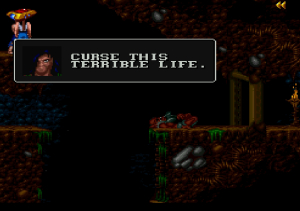
Curse This Terrible Life.

MN: “I don’t know why this stuck in my mind, but I was watching a YouTube playthrough for Blackthorne for this because my memory sucks and there was this one piece of dialogue that stuck with me and it was “Curse This Terrible Life.” For some reason that line got stuck with me and whenever I think back on my career and how it got started I associate it that line “Curse This Terrible Life”.”

TC: “You worked for Blizzard for 23 years, you’ve gone independent a few years back but you’re still cranking out lots of projects. What are some things that are being released soon or have just been released that we can look forward to reading from you?”

MN: “I just finished a sci-fi trilogy called “Skiptracer” and I’d love for people to check that out. I did a book with Samwise called “Strange Highways” and there is more potentially on the horizon. We wanted to establish an IP and make a franchise out of it. I’m writing a Blizzard book called “Forging Worlds” and it has some of the most iconic art. I’ve been sitting here telling stories and it’s 30 years worth of stories from Blizzard.”

Medal of Honor Frontline Review

Medal of Honor made the jump to the next generation and released the third game in the series titled Medal of Honor Frontline in 2002. Developed by EA Los Angeles, and published by Electronic Arts, the protagonist, Jimmy Patterson, of the original Medal of Honor returned. Gamers could now access the World War II first-person shooter for the PlayStation 2, Xbox, and Nintendo Gamecube. My Medal of Honor Frontline review was played on my PS2. Prepare yourself, because in 30 seconds we’re storming the beaches of Normandy in this Medal of Honor Frontline review!

Medal of Honor Frontline Plot:

If you’ve played the original Medal of Honor, you’ll recall our hero, Jimmy Patterson. He was already well-established in the first game but in Medal of Honor Frontline, Jimmy arrives in Europe the absolute worst way. He storms Normandy beach in one of the most brutal and important battles of World War II.

Jimmy survives Omaha Beach and begins to receive instruction from headquarters. His second mission is to sabotage an impressive new submarine that the Germans are cruising around in. After battling through some rural villages, Patterson sneaks aboard the submarine and destroys it. It’s here that he identifies Nazi officer Sturmgeist who becomes somewhat of a target throughout the game.

Patterson is sent to Holland next to rescue an important member of the Dutch resistance. Teaming up with a few other soldiers, Patterson leads the way as they take out tanks and enter a small city at night. He then infiltrates a Nazi fortress and rescues the Dutch resistance member.

His next mission is to cross a heavily guarded bridge filled with snipers and German soldiers. Clearing out the bridge is no easy task but Jimmy manages and the Allies cross the bridge the next day. Jimmy makes his way to another city where he teams up with a truck driver who drives him around town as Jimmy clears sections of Nazi soldiers. His real mission is to find out about the HO-IX, a new aircraft that the Nazis are working on.

Making his way onto a private armored train, Jimmy is informed that Sturmgeist is likely on the train too. Facing heavy resistance, Jimmy fights his way car after car to the front of the train where he blows up the majority of the train. Sturmgeist is able to get away by detaching the lead car from the car that Jimmy is on. Jimmy then takes the train tracks in a small cart to a large Nazi fuel depot that he blows up. He finds the hidden airbase where the Germans are keeping HO-IX and kills Sturmgeist before escaping in HO-IX just before the Americans bomb the airbase.

Medal of Honor Frontline Gameplay:

During my Medal of Honor Frontline review, I was excited to see what the series did on the next generation after beating the first two games in the series on the PS1. Medal of Honor scored quite well, where Medal of Honor Underground thoroughly dropped off in quality. Where would my Medal of Honor Frontline review rank?

Well, it started off promising. The opening level has you storming Normandy beach and it’s basically a rip-off straight from Saving Private Ryan. That’s okay because that’s an excellent movie and to emulate the opening battle scene was every boy’s dream at the time. After you wipe the puke from your face you’re thrown overboard as you struggle to make your way to the beach. Bullets zip by you all with extremely realistic sound effects. Large holes in the beach are blasted away by bombs being dropped by planes and the German machine gunners are brutal and shredding the Americans apart. It’s easy to get sucked into the hype and Medal of Honor Frontline starts off very well but after the first mission, it all collapses.

While I completed my Medal of Honor Frontline review on my PS2, it didn’t feel like it besides the opening level. The menu from the first two Medal of Honor games returns, and the mission briefing is the same. I liked the interactive menu, but the mission briefings are low-quality. Just some text and some old World War II footage. It was fine for the PS1, but the PS2 offered much more power. The entire experience of Medal of Honor Frontline felt like a slightly upgraded version from the PS1.

My biggest complaint by far was enemy soldiers. They look terrible, with their faces all blocky. I couldn’t tell if this was for the PS1 or PS2 and there’s no excuse as this came three years into the life-cycle of the PS2. What got significantly worse was the aiming. I felt very confident in the original game by moving my aiming target around on the screen. I knew if I had it on the head of an enemy soldier he’d get a death sentence. The same can’t be said in my Medal of Honor Frontline review. There were times where I was 10 feet away from soldiers and I’d aim at their heads and my bullets would whiz past them on the left or right. It felt cheap and frustrating but what’s even worse was how unrealistic the soldiers were with their health. Many times I put a bullet in their heads only to have them miraculously rise from the dead and keep firing at me. It didn’t just happen with headshots but with close-range shots with a shotgun or one of the most powerful weapons, the BAR machine gun. I understand taking a few hits to the stomach and being able to fight, but at times I plugged three or four buckshot to their midsection with a shotgun only to have them get back up. Terrible aim and ridiculous health made levels much harder than they needed to be. (I played on normal difficulty)

The Nazis also suffered from poor environment bugs. There were times where they’d walk through walls, or get blow up outside of a building and return through a wall. Other instances had them getting blown off a balcony as their body froze in midair about six feet off the ground. Medal of Honor spent so much effort to make the first level an eye-opening attention-grabbing experience but neglected the small details in every other level.

You have a rotation of weapons at your disposal but what I missed was just a solid rifle. I felt like you either were stuck with a fairly useless pistol, a sniper rifle that was a pain to look down the scope each time, or a machine gun that missed everything in sight. I made it halfway through the mission “Several Bridges Too Far” before giving up on how difficult and unfair the enemies were. This wasn’t an instance of “Git Gud” but poor gameplay mechanics of having every bullet you fire miss the enemy or do little damage. I quickly turned on invincibility and played the rest of the game on it. Sure, it doesn’t sound fun but playing the game without it brought very little joy.

There were a few bright spots in my Medal of Honor Frontline review. When you’re on the train, you can take control of tank cannons and fire at a parallel Nazi train. The best part of the game was a mine cart ride that kept you on the rails as you picked off Nazi gunners in a fun-arcade segment. I expected more from the finale of the game. Sturmgeist is easily killed as he doesn’t have any extra armor, special weapons, or dirty tricks and then you hop in a plane that you can’t control as you fly off. You receive a letter that says you did well and then that’s it. Game over, they don’t even show the credits. It’s safe to say besides the opening level, the presentation in Medal of Honor was quite poor. What stands out were the sound effects, and music but only they could take this game so far.

Memories:
I first played Medal of Honor Frontline in seventh grade at my friend Sean’s house. He has an older brother who had the game and was showing me the opening level of where you storm Omaha beach. It was a cool experience and I remember being in awe of the graphics and carnage around me. Particularly, the bombs that lifted the sand 50 feet in the air were impressive.

We took turns playing it but I wasn’t very good at it so I’m pretty sure all I ever saw was the first level. It wasn’t until I renewed my interest in the Medal of Honor series that I properly played Medal of Honor Frontline. Boy, was I disappointed. I have every Medal of Honor game after Frontline in my backlog, and I’m nervous to play them after this one. The series needs to improve immensely.

Medal of Honor Frontline Review Score:

Medal of Honor Frontline put its best foot forward in the first level. If they took that same attention to detail and gameplay and stuck with it throughout the rest of the game, my Medal of Honor Frontline review would have been enjoyable. Unfortunately, the game is filled with buggy enemy soldiers who can take 10 shots to dispose of and an aiming system that is anything but accurate. Graphics look barely upgraded on the next generation, and the same presentation (or lack thereof) sours what should be a great World War II shooter. I fear that the first Medal of Honor is the greatest game in the series.

Medal of Honor Frontline scores a 6 out of 10.

What would you write in your Medal of Honor Frontline review? What was your favorite mission? How did you feel about the first level? Did you experience buggy gameplay as I did? Let me know your thoughts and comments, I’d love to read them.

Ghost of Tsushima Review

In 2020, Sucker Punch Productions and Sony Interactive Entertainment took us to a world filled with invading armies, beautiful scenery, and ancient traditions. Released exclusively for the PlayStation 4, Ghost of Tsushima was highly regarded by critics and fans. The samurai action-adventure game put us in the armor of Jin Sakai as he sought to liberate Japan from the Mongolian army. We write some Haikus and behead some traders in this Ghost of Tsushima review.

Ghost of Tsushima Plot:

Ghost of Tsushima is filled with ancient Japanese lore with characters who live and die by their beliefs of honor and traditions. The story is the best part of my Ghost of Tsushima review and enjoyed living through the dramatic scenes and scenarios that unfolded as I played through the game. I wouldn’t say Ghost of Tsushima is historically accurate but some fabrics to it are legit.

Starting in 1274, a Mongolian army begins to invade Japan. Jin Sakai is an honorable samurai who is fighting to defend his homeland led by his uncle, Lord Shimura. As they begin their battle with the Mongols, it’s clear that the samurai’s traditional and “honorable” way of fighting is ineffective in defeating the ruthless and savage Mongols who don’t follow the rules of war. During a beach battle, all of the samurai is killed in a bloody mess. Lord Shimura is captured and Jin wakes up in a cottage nearby.

A woman named Yuna nurses him back to health before instructing him to escape the area with her. Together, they escape the Mongol territory and flee to safety. With his armor and sword back, Jin heads toward the Mongolian fortress where Khotun Khan, the ruler of the Mongols is holding Lord Shimura captive. Jin faces Khan in a one-and-one battle on a bridge before being knocked off falling into a deep river.

Jin wakes up on a beach and begins to devise a plan of freeing his uncle from the Mongolians who are holding him captive in hopes that he’ll surrender his army. The traditional methods of how he battles begin to fade away as he becomes something of a legend to the locals. No longer does Jin fight face-to-face but instead hides in the shadows, uses poison, and other in-direct methods to killing Mongolian units.

He recruits a few warriors to help his cause. Yuna who helped rescue him agrees to fight along so she and her brother can leave the island. There’s an archer named Ishikawa who once served Lord Shimura. A female samurai named Masako wants revenge on the Mongolians for killing her family, and there’s Norio a warrior monk who uses a long spear to battle. With a rebel army assembled, Jin seeks out the help of Ryuzo a childhood friend who commands the Straw Hat Ronin warriors. Ryuzo is jealous of Jin and the reputation that he is quickly growing but agrees to help Jin take down the Mongols.

Jin and his army arrive at the attack point and frees Lord Shimura. Khan heads North with his army to continue the invasion and Jin discovers that Ryuzo betrayed him after making a deal with the Mongols. Ryuzo and Jin battle but Ryuzo runs away before being fatally wounded. With Lord Shimura free, they begin planning an all-out attack on the Mongols and Khan.

Lord Shimura continues to express distaste for how Jin has grown away from the Samurai ways despite Jin saving his life. With flashbacks throughout the game, it’s revealed that Jin’s father and mother were killed in the war when he was a teen. Lord Shimura takes him in and treats him as his own son which has put a strain on their relationship after Jin has moved on from the traditional battle techniques of the samurai.

With more warriors recruited, Jin and his uncle look to take a large castle back from the Mongols. Jin finds Ryuzo and the two duel with the result of Ryuzo dying. Together, Jin and Lord Shimura finish defeating the Mongols and clearing out the castle. After the battle Lord Shimura continues to express displeasure over the tactics that Jin uses to which he responds he saved hundreds of lives doing it his way instead of fighting the Mongols head on. Lord Shimura asks Jin to become his adopted son and help lead the army to which Jin declines. He surrenders to Lord Shimura and is taken, prisoner.

That doesn’t last long as Jin’s friends help bust him out but he is now exiled from Lord Shimura’s territory and hunted in Mongol territory. With nowhere to go, Jin hides in a small fortress as he figures out his next move to defeating Khan. Before his final attack on the Khan, Jin writes his uncle a letter and sneaks into his castle to deliver it on his dresser. The hope is that Lord Shimura will join Jin and together they will defeat the Khan in one last battle.

Jin arrives and begins attacking the Khan and his remaining army. Lord Shimura shows up and assists in battle with his troops and Jin is able to kill Khan in a duel. After the battle, the two go their separate ways to recover. Some time passes and Lord Shimura writes Jin a letter asking to meet where they used to spar when he was a teen. Jin meets his uncle and they reminisce about their time together and ride around the lake. Lord Shimura has been ordered by the new Shogun to kill Jin as he is seen as disrespectful and disobeys authority. They sit down and write haikus on their relationship before drawing swords. Jin defeats his uncle and it’s up to the player to spare or execute Lord Shimura.

Ghost of Tsushima Gameplay:

The plot of Ghost of Tsushima was entertaining and at some points it made me appreciate my Ghost of Tsushima review. There are a lot of great things about the gameplay of Ghost of Tsushima, but there are a few things that I couldn’t ignore during my Ghost of Tsushima review. The scenery and nature that surrounds Jin on his adventure are gorgeous. There’s plenty of vivid and picturesque landscapes as you ride your horse. Lakes, mountains, and autumn trees sprinkle around the map and flowers are everywhere. It’s an immersive environment that will keep you turning your head to see what else is there. Sucker Punch Productions gets full credit here but unfortunately, there are small details that erase some of the magic to this game.

Jin is called the Ghost of Tsushima and while that’s his nickname, sometimes he acts like a literal ghost as he walks through shrubs, bushes, and tree branches as they go through his body. The developers did a lot of work into making this game feel like a cinematic experience even including a black-and-white cinematic mode like old samurai movies, but the magic disappears when Jin interacts poorly with his environment. He isn’t the only one. Some enemies and allies of Jin’s get stuck on trees or rocks as they move toward you. One mission during my Ghost of Tsushima review had Ishikawa stuck by a tree branch unable to move. I couldn’t complete the next objective until he reached a dead horse but he couldn’t travel. I ran away and left the mission area for it to restart again.

There’s a difficulty curve within the first five hours. Jin is relatively weak, and there are different battle stances you need to learn to defeat enemies. At first in my Ghost of Tsushima review, it was difficult in battle (I played on normal) but then after about five hours, I got the hang of it. I countered a lot during a battle but by the end of the game, I was just running into the battles and being wreckless having learned what techniques are effective against who.

Jin has plenty of tricks up his sleeve including secondary weapons. I enjoyed the hallucination darts that made enemies fight each other and I never got tired of throwing my Kunai. It offered a different way of defeating enemies which were welcomed. Defeating enemies earned you experience to which you could level up some of Jin’s equipment and abilities.

Battles were fun at first during my Ghost of Tsushima review but once you encountered one town full of Mongols or a mission to rid the Mongols from an area, you didn’t see anything special or new afterward, and that included the main missions. The best part of the game was the duels. These one-on-one battles were the most cinematic and felt special as Jin dueled another samurai, enemy, or friend in a small area. It felt important and it was often the most challenging. There were a few times I died during these duels but I discovered that after you critically strike them, they’ll say something and leave their guard open again for you to drain it. It worked against every opponent.

Another complaint in my Ghost of Tsushima review is the camera. There were plenty of times that I found myself looking through a wall or window Jin battled just outside it. I grew frustrated when I was pushed to small corners where the camera continued to show less and less visibility. For all the emphasis they put on telling a great story and for all the work they put into making the world a dramatic and immersive area, it sure was unpolished. There were scenes where Jin’s armor was shaking uncontrollably which made him look silly as he spoke calmly.

There were a few characters I connected with during my Ghost of Tsushima review. I thought Kenji was a terrific character who added much-needed humor. Norio was a great character arc, and I even enjoyed Yuna’s loyalty to her brother and Jin. I didn’t care for Masako and wish that after she turns on Jin that you had the opportunity to kill her. (I would have)

I enjoyed the ending of Ghost of Tsushima quite a bit. The struggle between Jin and his uncle was well-written. Once I defeated him, I chose to honor him with a warrior’s death. I didn’t kill him out of hate, but I believed that his beliefs were so entrenched in tradition and honor that not killing him would make him live a miserable existence without the honor that he so desperately sought. It’s what he would have wanted.

Throughout the game, Jin can travel throughout the land freely as he gains more experience. I didn’t mind doing these small tasks but after a few weeks of playing Ghost of Tsushima, I grew tired of the same objectives over and over. I can only write so many haikus, find fox dens, honor shrines, and liberate villages before it becomes boring. I felt that Ghost of Tsushima never had that “wow” moment during any of the missions to make it memorable.

Memories:
There was a ton of hype around this game when it came out and I remember every arguing it should be game of the year. I think I went into this experience thinking it was going to blow my mind away and in the end, was a bit disappointed by the actual gameplay. The story was terrific and if there’s a miracle chance that it could become a series or a movie I’d be interested in seeing it.

Ghost of Tsushima Review Score:

Ghost of Tsushima has every reason to be an incredible game. It does the big things right, but the small things go left unpolished. There were too many instances where a glitch ruined a cut scene or battle for this game to be considered a masterpiece and I played it almost a year after its release so any patches should have fixed those issues. The story of Jin and his uncle was the best aspect and I thoroughly enjoyed playing through it but there were a few things that weighed this game down from becoming an all-time great.

Ghost of Tsushima scores an 8.8 out of 10.

What would you write in your Ghost of Tsushima review? What decision did you make at the end? What was your favorite character? Do you believe Ghost of Tsushima is game of the year worthy? Let me know your thoughts and comments, I’d love to read them. If you’d like to own a used copy of Ghost of Tsushima for the PS4 you can purchase a used copy of it on eBay for $40.

Manami Matsumae Interview

The following interview was between TigerChainsaw and legendary video game composer, Manami Matsumae. Her career spans over 30 years with credits for the Mega Man Series, Final Fight, U.N. Squadron, Shovel Knight, and over 50 other video games. This specific interview is dedicated to her work on the original Mega Man in 1987 for the Nintendo Entertainment System where she most notably came up with the “Game Start” jingle.

Special thanks to Alex, Matsumae’s agent who helped set up this interview and interpreted for both TigerChainsaw and Manami Matsumae.

Manami Matsumae in her profile picture for Brave Wave Productions.

TigerChainsaw – “How did you first get involved in composing music and sound effects for Capcom? What led you to them?”

Manami Matsumae – “I was attending a school for arts and I remember during my senior year I saw a job ad for a company called Capcom that was looking for people to join their sound teams. I applied for the job and was hired for it.”

TC – “What were the Capcom offices like back in 1987? What was the work environment and how did you fit in?”

MM – “Back at that time, Capcom’s headquarters were separated into two buildings. One was for the main development teams and the other was for the sound team. The year I joined Capcom happened to be a year where the number of employees increased dramatically, so they needed a separate area for the sound team. In terms of the office environment, all the employees got along with each other very well. It was a very lively kind of environment.”

TC – “What was your initial reaction to hearing about Mega Man and what was the process for you to get assigned to working on the sounds and music of the game?”

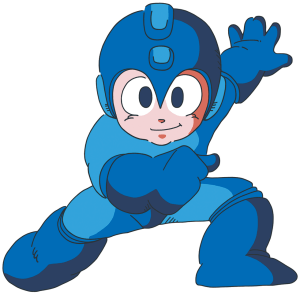
MM – “When I first saw the planning documents for Mega Man I realized that it was quite different from anything that Capcom had made up until that point. Mega Man was an action-oriented game with a robotic or mechanical protagonist. Even music in Capcom games up to that point was much more classical focused so I realized that for the soundtrack of Mega Man, I had to go with something more rock-oriented.”

Matsumae drew inspiration for her composing based on the robotic looks of Mega Man.

TC – “What’s your creative process for composing? Do you have a specific routine?”

MM – “When I compose music I look at the character, I look at its animations and the background visuals of the game and compose my songs around that.”

TC – “How long did it take for you to finish your work for Mega Man, did you struggle at all, or was it a smooth process for you and the others who worked on the game?”

MM – “The hardest part about working on Mega Man was the fact that I joined the project pretty late in development. I joined Mega Man around the month of August and they told me that they had a deadline for the game of December of that year. That’s when they wanted to release the game so that would be only four months. That was the toughest element in making sure all the tracks and the sound effects were done in that period.”

TC – “When the game was finished and published, what were your expectations for it? Did you ever imagine that over 30 years later the franchise would still be going strong and create millions of fans around the world?”

MM – “When the original Mega Man came out in Japan it didn’t actually sell that well but the team decided they wanted to make a sequel anyway. The sequel, Mega Man 2 was released the following year and that one actually sold well. That allowed for the Mega Man franchise to continue after that point. For me personally, it’s an honor to be involved in the Mega Man franchise and I’m really happy that the Mega Man series has lasted for more than 30 years at this point.”

TC – “What’s a memory you’ll never forget during your time when working on Mega Man? It could be a funny memory or just something you’re very fond of.”

MM – “I was put on the Mega Man project not long after I joined the company. When I think about the time of Mega Man’s development I remember having to learn how to use a P.C. which was actually a fun task. I remember having long days in the office and staying until 11:30 PM contributing to the project in different ways. That’s what I think of when I remember the development of Mega Man.”

TC – “Aside from composing music to video games, do you enjoy playing them too? If so, what series of games do you enjoy?”

MM – “Yeah, I do play games outside of work. I’d say my favorite would be the Fire Emblem series.”

TC – “Since helping compose for Mega Man, you’ve had quite a career with composing music for other games. You’ve been featured in books about female creators in the video game industry and I’m curious out of all the games you’ve worked on what’s been your favorite and why?”

MM – “That’s such a hard question to answer because having worked on all of those games it’s hard for me to say what I liked or what’s my favorite because I like all of them very much.”

TC – “You are still working in the video game industry, are you working on any future or current titles?”

MM – “The latest game that I worked on actually just came out on March 18th (2021). It was a Korean video game and there’s a Nintendo Switch port for it called Dark Water: Slime Invader and I worked on the music for that title.”

HeatSeeker Review

Subscribe To My YouTube Channel!

HeatSeeker was released in 2007 for the Nintendo Wii and PlayStation. Developed by IR Gurus and published by Codemasters, HeatSeekers lets players jump into the cockpit of real fighter jets as they defend the skies from a fictional terrorist country. My HeatSeeker review will be for the Wii so let’s watch our six and fly into the horizon as I explore what Heatseeker has to offer.

HeatSeeker Plot:

You are a pilot named “Downtown”, and you’ll hear your name about every three seconds during missions. I’m not entirely sure if you are even a pilot for the United States but you’re taking down terrorists from a made-up country. The leader of this country is getting aggressive and setting up blockades in the ocean while launching nukes in the ocean. It’s your job to put him in prison and keep the world safe from his evil ambitions.

HeatSeeker Gameplay:

Why did Nintendo force motion controls into every Wii release? The first thing I do when I pop in a Wii game is turn that God-awful motion controls off. It took me three different attempts to find what I wanted for HeatSeeker controls but I settled on the alternate 2 controls which allowed me to steer with the nunchuck controller and shoot with the remote. My HeatSeeker review was almost ruined before it even started!

This game was cheaply made from the eye-gouging graphics that make the battle landscape look like a ten-year’s-old toy, to the grainy trees that dot the islands. Mission briefings are laughable as they installed a real-life news anchor to give fake news (what a concept) to you about what the world is witnessing. After she discusses how the world sees the war unfolding you’ll be presented a few brief mission points about what you can expect. These are told by some war General and the graphics look like they belong on the GameBoy Advance. Graphics don’t make a game but when it’s released in 2007, I expect some type of quality from it. Instead, this game could pass as a late PS1 title. The only thing that stands out is the actual plane that you pilot. It looks like the only item in the game that the developers took time to polish up.

HeatSeeker features 19 missions. 17 of them are easy to challenging with the last two missions being insanely hard but more on that later. You can expect missions to last 15 minutes to an hour. The final mission lasted almost three hours for me due to all the restarts or retries. I grew so frustrated with the game. It was the maddest I’ve been in a long time. I typically can beat 90 percent of video games especially when they are more modern but HeatSeeker presented a real challenge and I didn’t know if I’d be able to finish my HeatSeeker review.

In most missions, you’ll have targets to destroy, a time limit to do something, escort cargo, or a full-on dog fight in the sky. The second-to-last mission had me protecting a carrier plane against an onslaught of enemy planes. Within 10 seconds the health of the plane you are supposed to protect drops under 50 percent. It’s not like you have five planes to shoot down, but you have almost 20 as they just dive bomb onto the cargo plane. I retried that mission close to 30 times and I thought I wasn’t ever going to beat it. After a lot of replays and some luck, I got past it.

The final mission saw just about everything come together. You had to bomb an island and take out all the defenses. Cut the power and survive tons of enemies while your radar is down and then destroy three locks to the nuclear plant before destroying the plant that has an incredible defense. All this sounds fun, but it’s really not. That’s my issue with HeatSeeker. I had fun during small portions of the game but even when I was cruising through the first 17 missions, I wasn’t enjoying it. For the final mission, I had to get cheap and fly out of the warzone just to keep my plane alive as I waited out countdowns. The finale took about three hours for me to beat after I replayed certain sections over and over. This was one of the hardest missions I’ve ever beaten and it was just on normal mode. The big kicker is that you can’t turn down the difficulty once you begin the campaign. If you select easy, normal, or hard, you’re stuck with it.

Once you blow up the nuclear plant you get a debriefing with the general predictably saying you did a great job and the world is a better place because of you. All that for some cheap ending. I feel used.

The best part of HeatSeeker was the planes. I enjoyed piloting real-life planes that are used in the Air Force. You’ll get enjoyment out of breaking the sound barrier and cruising through the clouds but the combat didn’t invoke any fun. You’ll have a few weapons at your disposal and can change them midflight. Enemies include planes, ships, subs, tanks, and mounted guns. Each one can be taken out with various weapons and it’s up to you to discover which weapons work best. There’s a stealth feature for your plane but I never used it. Up in the skies, you can command a few other planes but it felt useless and for the entire game, I just let them do what they wanted.

Want to know what’s real BS? I was so stuck on the second-to-last level that I looked at the cheat menu that unlocks features like quicker reloads etc… I tried to unlock it AND IT TOOK ME TO A CALL SCREEN TO CALL A NUMBER AND PAY $2.99 WITH MY VARIATION CODE. YOU HAVE TO PAY TO UNLOCK CHEATS! SCREW THIS GAME! AND SCREW THIS HEATSEEKER REVIEW!

Memories:
Besides riling me up like I haven’t been in a while, I had very little fun with HeatSeeker as it felt like a chore. I hope to erase all memories of this game soon and move on to better games.

HeatSeeker Review Score:

HeatSeeker has poor presentation, terrible graphics, and missions that feel like marathons. There’s a large difficulty spike after 95 percent of the game is easy. The best part is piloting real-life planes that are used in the Air Force but that’s not enough to make it enjoyable. Do yourself a favor and play other air-combat games if that’s what you’re into. HeatSeeker isn’t worth much of your time and certainly not the effort I put into beating the final two missions.

HeatSeeker scores a 5.9 out of 10.

What would you write in your HeatSeeker review? What was your favorite plane to pilot? Were you able to beat the final mission? What other air-combat games do you enjoy? Let me know your thoughts, I’d love to read them.

Sudeki Review

Subscribe To My YouTube Channel!

An exclusive RPG landed on the original Xbox when Sudeki was released in 2004. The action-focused fantasy was developed by Climax Studios and published by Microsoft Game Studios. Four heroes must transverse through different realms and unite together to defeat the God of Darkness, Haigou. Let’s put our magical staffs together and unite some realms in the Sudeki review.

Sudeki Plot:

Sudeki is the name of a land in a fantasy world that has been torn apart by two Gods. Tetsu was the original God but grew lonely ruling the land by himself so he created a twin to keep him company. This twin named Haigou began to rule a land called Akloria. Soon, the twins began to fight and Haigou overthrew his brother sending the separate realms into chaos. Tetsu is able to banish Haigou with the help of four warriors who work together to defeat Haigou and return the lands to normalcy.

A thousand years pass and all is well in the land of Sudeki or so it seems. The two realms of the light world called Haskillia, and the dark work called Akloria exist in mostly peace until Akloria warriors begin to appear from the sky and attack cities. The Queen of Haskillia instructs her staff to build a mega-defense that includes a giant shield that will protect her kingdom. This is where the story of Sudeki picks up.

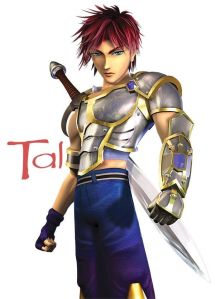
There are four main characters from Sudeki each. Tal is the swordsmen, a soldier in the Queen’s army whose father is the commander. He lost a brother to the Akoloria while out on patrol and his father blames him for the loss of his brother. Tal is unoriginal and a bit bland for my taste.

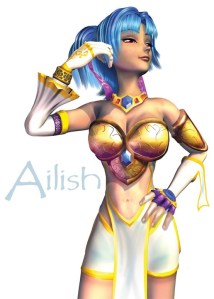
Ailish is the princess and daughter of the Queen of Haskillia. She seems a bit dimwitted but has good magical powers and an even better body. It’s clear that the designers of Sudeki wanted their female characters to “pop” in all the right places. Ailish is your typical support character for healing and uses her magical staff. Ailish and Tal have some weird and very awkward tension between each other. It’s the type of flirting and weird interactions that you’d find between middle schoolers, well middle schoolers pre-2010. I think now, most middle schoolers are giving blowies and having circle jerks but in the innocent days, Tal and Ailish would be right at home in awkward flirtations.

Elco is the science geek. He has an array of gadgets and does battle with a gun. He uses facts and reason to calculate his life’s work which working for the Queen. He’s one of the lead designers for the mega-crystal shield and has dedicated his life to completing it. His arm was mangled in some failed experiment so he has a robotic arm as a replacement.

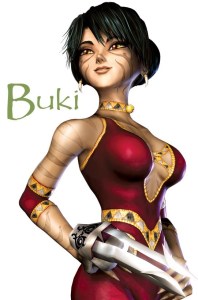
If Elco is the scientist, Buki is the spiritualist. She lives her life by trusting in her God. I don’t think she is fully human either, throughout Sudeki there are many humanoid-animal creatures. Buki seems to have some characteristics of cats including pointed ears and stripes. It comes as no surprise that her weapon is large metal claws that she wears. Like Ailish, Buki does her squats. She and Elco bicker as they have opposite beliefs but she seems to be polite about it as opposed to Elco who is snobby. Buki is a solid fighter too, she’s both quick and powerful.

These four heroes travel together throughout Sudeki finding crystals in various places to help build the wall. Tal sets out to get away from his abusive father, Ailish is tired of being cooped up in the castle, Elco is instructed by the Queen to find crystals, and Buki is a guest who realizes her people will die too if nothing is done. As the four are out battling enemies and collecting crystals, the Queen of Haskillia concedes to her personal bodyguard that she is gathering the crystals not to build a barrier but to revive the dark God Haigou in hopes of him turning her immortal and ruling the land together.

The four warriors travel between realms to reclaim crystals but discover that the dark realm hasn’t been attacking them under orders. Something in Haskillia is driving the Aklorians mad and causing them to attack Haskillia. While in the dark realm, Tal, Ailish, Elco, and Buki meet their dark versions as the two realms are identical including the people that inhabit it. They decide to work together to figure out what’s going on except Elco who steals the last crystal and takes it to the Queen.

Realizing he made a terrible mistake after giving the Queen the crystal, Elco buys time by sabotaging the machine. He travels back to the dark realm and meets up with the others. In a ritual, they combine themselves to form their true being. The Queen’s personal bodyguard shows up and throws a decapitated Queen at their feet and challenges Tal. In a one-on-one fight, Tal weakens Haigou as the other three chant magic spells at him killing him once and for all. With the crystals gone, and Haigou dead, the two realms reunite into Sudeki once again.

Sudeki Gameplay:

Sudeki has not aged well. Graphics certainly don’t make a game but by the standards of 2004, the 3D character models look cringy. It reminded me of the poor CGI characters in late 90s commercials. What’s even worse is the terrible writing and voice acting. I’m not talented in the voice acting department but these are one of the times that I think to myself “who the hell listened to these actors and gave them the green light?”

Do you know who Tommy Wiseau is? He’s the director and actor in the cult film “The Room”. His accent is a mystery and no one really knows where the hell this guy is from. Every character from Sudeki seems to be voiced by Tommy Wiseau. Not only do you not recognize any accents but they purposely are exaggerated. In reality, it makes all the characters come off as stupid, not only in design but in intelligence. I know I’m starting off this review tearing Sudeki apart but these are sores in a game that has potential.

Where Sudeki does soar is the actual gameplay and that’s why my Sudeki review score won’t be as terrible as you might think. It’s a fun and challenging game to some degree. As an action-RPG, you’ll hack and shoot plenty of enemies while you raise your stats as you level up. You’ll be able to control each character. They all have their strengths and unique abilities. Tal can pull heavy boxes, Buki can climb certain structures, Ailish can unveil items hidden by magic, and Elco can use his jet pack to fly to other areas. If I had to rank my favorite characters to play as I’d say Buki, Elco, Tal, and then Ailish in that order. As I mentioned, Buki is quick and powerful making her ideal to battle with.

During the story, there will be times where the characters are separated and you’ll control only two of them or sometimes just one. Each character will also encounter a boss that they will have to fight on their own. I liked this idea and all bosses were challenging to a degree. I died a few times during Sudeki but never twice in the same area.

To heal in the game you can use magic or items. There aren’t many areas in the game that will fully heal you and only one outside of towns. I wish they would have incorporated a “camp” feature where there were areas in the wilderness to fully heal your party. Depending on the character you’re playing with your view will change. With Tal or Buki you’ll be in third-person while fighting. Inputting buttons promptly will result in higher damaging attacks but after I learned that enemies can cancel these by attacking you during the animation, I quickly just started to mash buttons. It’s quicker but sloppy. You also have a shield and roll button but I never used them.

The most powerful attacks come when you have enough magic points to pull them off. These attacks cause large amounts of damage and can alter stats or inflict negative elements on enemies. It wasn’t until I was almost finished with the game that I discovered the spirit attack which you can pull off after filling a meter. This mega attack wrecks almost every opponent besides bosses but takes a good chunk out of them. Speaking of bosses, the final one wasn’t difficult. I beat him on my first try and didn’t struggle. With enough magic attacks, I defeated him within five minutes. The ending of Sudeki is quite stupid as the screen just cuts to credits with no mention of the characters or what happened to the land of Sudeki.

There are some fun moments from Sudeki. The characters may be voiced poorly and the writing atrocious but it results in hilarious situations. When the party enters a cave full of mermaid drawings the girls reference the boobs on her and the guys ogle the painting. Another moment of laughter was when Tal and Ailish finally kiss and it looks like his kiss kills her as she immediately droops her arm like a lifeless corpse.

I wonder if there are multiple endings to this game. Near the end when you take control of Elco you have the option to steal the crystal or do nothing. I chose to not steal it but I’m not sure if that decision changes anything. Sudeki isn’t special, but when you turn the cut scenes into laughter and just go along with the dialogue, there’s fun to be had with the battles.

Memories:
In the Summer of 2020, I started to collect video games. Not out of boredom but just because my passion grew suddenly. I’d visit a few stores including a place called Disc Traders. They had Sudeki out CIB for $8. I had never heard or seen of this game before but I saw the huge tits on Ailish and thought that it would be a game that I would enjoy.

It sat in my collection for over a year before I popped it in and played it through my Sudeki review.

Sudeki Review Score:

Sudeki is a game that isn’t special. It’s not terrible either. Nothing about it stands out and besides the terrible voice acting and writing, the game features good gameplay. If you want another RPG that will kill a weekend or a game that you can sink your teeth into without much effort, Sudeki is great for that. Nothing about Sudeki is innovative or special and that’s okay, not every game needs to be. It is what it is, and that’s an average RPG that many have probably forgotten. Gameplay and puzzle-solving are entertaining. If the voice acting was better, it might reach the low 8s. Too bad.

Sudeki scores a 7.4 out of 10.

What would you write in your Sudeki review? Who was your favorite character to play as and did you cringe at the voice acting too? What other forgotten RPGs are out there? Let me know your thoughts, I’d love to read them.

Kirby’s Pinball Land Review

Subscribe To My YouTube Channel!

Rolie-polie and round, Kirby was the perfect selection for a video game character to literally be shaped into a pinball. The pink little guy stars in his first spinoff from the main series in Kirby’s Pinball Land. Developed by HAL Laboratory and published by Nintendo in 1993, the pinball game would be released on the Game Boy. Let’s tuck and roll into Kirby’s Pinball Land review!

Kirby’s Pinball Land Plot:

King DeDe has mastered molecular shrinking and created a shrink ray similar to the machine in “Honey I Shrunk The Kids”. One day as Kirby is frolicking around, King DeDe aims the ray at him and shrinks him down to marble size.

Thinking of the best ways to torture Kirby, King DeDe shoves him into a pinball machine to be bounced and paddled around, after all, Kirby is a very naughty boy. Kirby finds the strength inside himself to push past the relentless assault of bells and whistles to reach King DeDe’s three generals who have also been shrunk down in size due to their disobedient nature. Inside three different pinball machines, Kirby battles his powerful foes.

Frustrated that his generals have failed him once again, King DeDe decides to shrink himself and take care of Kirby once and for all! Kirby and King DeDe duke it out inside the pinball machine and after enough bounces to the head, King DeDe taps out. Kirby rolls out of the pinball machine and the shrink way wears off as he regains his normal size. That is the plot to Kirby’s Pinball Land straight from the manual. (I have to put this disclaimer in because I know there are people dumb enough to believe that, or dumb enough to read my crappy blog in general but that’s not the plot of the game nor is it in the manual)

There isn’t a plot to this game, it’s a pinball video game. Oh well.

Kirby’s Pinball Land Gameplay:


Kirby’s Pinball Land is constructed very interestingly. You’ll be able to select from three pinball layouts, each with its unique boss. Wispy-Woods Land, Kracko Land, and Poppy Brothers’ Land are delightful names for the stages that are named after the bosses who control them.

Stages are separated into three sectors. The bottom sector is worthless, there’s not much to do here besides score points. A middle section can unlock a minigame in each machine. These minigames vary from an “Alleyway” clone, throwing items up for Kirby to catch them, to playing soccer with a squid. Yes, you read that correctly. The real goal is to get Kirby up to the top level of each pinball machine. It’s hard to keep him there and I’d say it was the most difficult part of the game. I grew frustrated multiple times as Kirby would routinely fall into the lower stages. The bottom stages were a big pain to escape as there is typically something blocking the exit above like a moving enemy.

If Kirby (the pinball) falls between the bottom-level flippers, then there’s a chance that you can launch him back into the level by pressing ‘A” at the exact moment he reaches the lowest point on a spring. It’s not impossible but I achieved it less than half the times he fell. It’s the one last chance at saving grace before Kirby bites the dust.

Boss fights were my favorite part of my Kirby’s Pinball Land review. I first defeated the Poppy Brothers and I think they were the most difficult. You need to bounce Kirby into them before they can throw bombs to disable your flippers. It took me a few times to defeat them. Next, I defeated Wispy Woods. The fight with him was easy as he just huffs some wind at you while dropping a bad apple every now and then. Hit him in the face enough and he will get knocked out. My final fight was with Kracko, the weird eye-cloud that zaps you. He moved around on screen the quickest but aside from his lightning strikes doesn’t pose too much of a threat.

Once you defeat all three bosses, Kirby will be warped to a King DeDe fight. You don’t unlock a new machine, instead, it just takes you to the fight and I think they missed a chance to add an extra layer of fun. King DeDe was a wimp and was just as easy as Wispy-Woods. I may have lucked out but King DeDe was rolling around on the screen and Kirby got put into the same corner where he bounced off King DeDe about six times in a row before falling back down. This made the fight easy and in less than 20 seconds, King DeDe was done for.

When you beat him, Kirby is transported to a strange screen where he walks among his enemies. After a short break, he is taken back to the beginning of the game where you can try for a new high score. Speaking of high scores, during my playthrough I reached 500,000 points. The game interrupted my play and showed me a brief 3-second clip of Kirby dancing with “congratulations” on the screen. It was extremely unnecessary and a distraction especially if you are getting into the flow of a game. Just like the first few Kirby games, the soundtrack was spot on though.

Memories:
I didn’t have this game growing up but I did have Pokémon Pinball which I played a ton. The developers of Pokémon Pinball definitely borrowed some ideas from this game. Kirby’s Pinball was a quick game for me taking just a few hours to beat.

Kirby’s Pinball Land Review Score:

Pinball can be fun, but I can’t get into it as the older generations did. It was their “video games” so what do you get when you take pinball and transform it into a video game? A solid time, but one that can be frustrating. I didn’t enjoy the constant struggle to keep Kirby afloat to the highest level, and at times I think the screen was too cluttered with obstacles for him. The boss fights were welcomed but perhaps too easy. This game is a must-own for Kirby fans, and if you enjoy Pinball you’ll like it but for all other gamers, this really isn’t a must-play.

Kirby’s Pinball Land scores a 6.7 out of 10.

What are your thoughts on Kirby’s Pinball Land? What was your favorite machine to play? Which boss gave you the most trouble and what’s your favorite pinball video game? Let me know your thoughts, I’d love to read them.

Anarchy Reigns Review

Subscribe To My YouTube Channel!

Exaggerated character design. Hilariously terrible dialogue. Mind-numbing button mashing. Anarchy Reigns had it all, and I enjoyed every bit of it! Developed by PlatinumGames, and published by Sega, Anarchy Reigns was released in 2013 for the Xbox 360 and PlayStation 3. For my Anarchy Reigns review, I chose the PS3 version. The game is very rough around the edges, but once you embrace it for what it is, it’s an enjoyable experience where there’s plenty of fun and laughs to be had. Let’s roid up and punch into this Anarchy Reigns review!

Anarchy Reigns Plot:

Before firing up Anarchy Reigns, I wasn’t aware of the connection it had to the Wii console exclusive, “MadWorld”. Oops. At the time of writing this review, I haven’t played MadWorld, so I hope it didn’t spoil the experience too much for me. Instead of a direct connection, it’s more of a spiritual successor, so hopefully, I’m in the clear for any major spoilers if I choose to play MadWorld at some point.

The game takes place in some alternate version of Earth. Due to pollution or chemicals, the majority of humans have transformed into mutants who have organized gangs. Much of the world is left in ruins and only a few remain. Along with the humans that have become mutants, there are plants and new species that terrorize the living.

Anarchy Reigns features two main playable characters. There’s Jack Cayman who was from MadWorld. He takes the shape of an enormous roided-out angry middle-aged man. His biceps are bigger than my body and he’s one grumpy SOAB. (Son of a bitch, for those of you not familiar with acronyms) The other main playable character is Leo, he is the clone of Raiden from Metal Gear Solid. Okay, maybe not an exact clone but it’s clear he was inspired by Raiden from his suit, powers, hair, and passive nature.

Jack and Leo both have the same goal. They want to capture a man named Maximillian. Jack has been hired by Max’s daughter to capture him alive, but the twist is that Max killed Jack’s daughter. Leo on the other hand is Max’s former squad leader. He looks up to Max and is hesitant about why he has become a fugitive but wants to capture him alive and bring him to justice.

Character design is the strong suit of Anarchy Reigns. There are a few different characters that make their way into the story. All of them are distinct, all of them in the form of the early 2000s designs which are over-beefy, big-boobed, and full of spunk. I loved it. I miss this type of video game where everything isn’t serious or politically correct. All characters have terrible accents and their dialogue is cheesy.

Jack works with a pimp named Black Baron and his robotic hoe. Black Baron was just as awesome to witness as his lines left me smirking and laughing. He embellishes being the token Black character and embraces. One quick exchange with a ninja assassin has the Black Baron yelling “Ninja Please”. I’m sure you can use your imagination and put together the joke.

Leo and Jack battle it out a few times before realizing they have the same goal to track Max down. Jack reaches him first and is tempted to murder him for killing his daughter. (Understandable) Meanwhile, Leo has been having internal conflicts within his unit. His commander, a Russian man named Nikolai has been bickering about what to do with Max and why he has turned into a fugitive. Max has been accused of killing his wife, and Leo believes he is innocent.

After Leo and Jack defeat Max and are prepared to take him in to face justice, Nikolai storms the premise. He and Leo finished a battle against each other a few minutes prior after Leo becomes suspicious of him. Nikolai goes on a strange tangent about justice before being defeated by Leo and Jack. They take the remains of Nikolai’s body (he is part cyborg) and drag him back to have his day in court. Max is alive, and with the help of Leo walks back with them.

Anarchy Reigns Gameplay:

Anarchy Reigns is a throwback in terms of gameplay. If you played Fighting Force on the PS1, you’ll be right at home with what Anarchy Reigns offers. You’re presented cinematic intro video and then allowed to choose between Jack and Leo. Whoever you pick, you’ll play through their story and when theirs ends, you’ll start over at the beginning with the other character. When both stories are completed the game will wrap up with a conclusion mission that involves both main characters.

Just because you pick Jack or Leo doesn’t mean you’ll be playing with them the entire time. Anarchy Reigns allows you to select different fighters for missions as they team up with you. I didn’t stray from the main characters, but I liked the option.

Before completing the main campaign, I did the tutorial. I’m happy to say that it proved beneficial as I learned a few tricks of the trade. Locking on an opponent is a must as chaos ensues all around you during the brawls. If there’s a boss, you’ll want to lock onto them to avoid punching the wrong enemy. Each character has their unique skillset and moves. Jack came with a killer chainsaw (Yes, I liked it) and Leo had strange blue blades on his arms and legs. After landing enough punches and kicks you can use these moves to deal massive damage. You are also given a rage meter similar to God of War. Fill it up and unleash it to become invincible for about 20 seconds and destroy anyone in your way.

There are 24 missions for Jack and Leo to complete. Missions are spread between four worlds and split into two categories. There are the side missions that are completely ridiculous like shoving huge balls into nets or delivering briefcases within a time limit. Main missions push the plot forward and were my favorite. To play the main missions you’d have to unlock them by completing the side missions and scoring points. Points were used to unlock missions. Sometimes I was forced to replay side missions to earn more points to unlock main missions.

Combat wasn’t difficult. It revolves around pushing the same button over and over. The harder enemies were the ones that kept a guard up but once you break it, they are easy to defeat. I was defeated only a few times throughout Anarchy Reigns’ review. Something I didn’t do but I believe would be tons of fun is the multiplayer. There are many characters to choose from and it would be great to learn their moves or play against friends.

Memories:
I picked up Anarchy Reigns very cheap. Reading the mostly negative reviews didn’t spark my interest in playing it. It wasn’t until I grew a bit burned out on cognitive skilled games that I wanted a change of pace. To my surprise, I loved playing through Anarchy Reigns as it refreshed my brain by making any activity mind-numbing. (No, really I needed this type of experience!)

Anarchy Reigns Review Score:

As the main character, Jack, Anarchy Reigns is rough around the edges. The dialogue is laughable and the character mouth movements make you think you’re watching a poorly dubbed movie. Characters are designed in a throwback form, and the entire game is nothing but just beating people up and completing silly challenges. All this said if you think this game will be a disaster you are sorely mistaken! I had way too much fun playing through it and learning about the characters. Don’t expect the Mona Lisa, and you’ll learn to love this game. It’s the perfect example of a low-budget but FUN game.

Anarchy Reigns scores a 7.3 out of 10.

What are your thoughts on Anarchy Reigns? Who was your favorite character to fight with? What did you think of the designs? Which mission was your favorite? Let me know your thoughts, I’d love to read them.

Mystery House Review

Subscribe To My YouTube Channel!

An entirely new genre of video games was born when Ken and Roberta Williams created “Mystery House” in 1980 for the Apple II computer. The horror-adventure game was the first of its kind as it featured “graphics” on the screen as the player typed in commands. It was an instant hit and laid the framework for Sierra On-Line to become one of the most dominant game developers for the next 20 years. What does Mystery House offer over 40 years later?

Mystery House Plot:

You control an unnamed character who approaches a large mansion. Why you are there and whoever invited you, you’ll never know. As you enter the mysterious house, you are greeted by seven guests.

Tom is a plumber.
Sally is a seamstress.
Dr. Green is a surgeon.
Sam is a mechanic.
Joe is a gravedigger.
Bill is a butcher.
Daisy is a cook.

The door behind you locks and as soon as you leave the room the guests disperse. You soon find that one of the guests is a killer! As you explore the mansion, you find bodies one-by-one. You slowly start crossing characters off the list. There are creepy notes left in the house and one of them even mentions jewels somewhere in the house!

Walking around the house you pick up clues and weapons. You even narrowly escape a dagger being thrown at you! Eventually, after searching the mansion, walking through a nearby forest, and returning to the mansion, it’s clear who the killer is. Daisy!

You find her hiding above the attic in a trap door. With no other choice, you pull the trigger on a gun and kill Daisy. A note is found on the floor that tells you something is in the basement. You explore a bit more in the basement and discover that Daisy hid the jewels behind a loose brick. With the jewels in your pocket, you leave the mystery house behind and walk through the front door.

Mystery House Gameplay:

Mystery House may seem primitive but back in 1980, it blew people away. I recently read Ken Williams’ book on the rise and fall of Sierra as I took a trip to Hawaii. It was incredible to read all the history behind the massive game company.

Roberta Williams, (Ken’s wife) became enamored with a text-based adventure game. She had the idea of making her own game and knew Ken who was an expert computer programmer could create it for her. She convinced him and started writing the story and drew the graphics. In just a few weeks, Ken created Mystery House. He brought the game to a few computer stores where the customers went nuts for it. Soon he was selling Mystery House all over America and so Sierra was born.

I played Mystery House with my wife as I thought she might enjoy it. Together we solved the mystery and came away with the jewels, but believe me, it wasn’t easy at first. You type basic commands on the screen after reading the text. Visually, you are presented with very primitive graphics. (Think stick people) It was difficult at times to decipher what we were looking at. Objects like knives, matches, candlesticks, and other items are scattered in the house. You’ll have to squint to figure out what they are.

Our biggest complaint was the commands. We died about 20 times after a fire started in the dining room. You had to pour water from a pitcher you were holding onto the fire to extinguish it. We knew this and tried different verbs and nouns to put the fire out but we failed each time. It was very frustrating and it wasn’t until I looked up the exact phrase that we were able to proceed. If you didn’t get the command right on the first try, the fire kills you.

Mystery House is a short game. If you know what you are doing you can beat it within 15 minutes. Back in 1980, this was all mind-blowing so I’m sure it took people weeks to beat the game. I have a pretty good grasp of how games work so it wasn’t that I didn’t know what to do but rather how to do it. That’s where my wife and I got annoyed with the commands.

There’s a few instances of complete bewilderment in the game. Walking through a forest that looks the same on each screen is incredibly difficult to navigate. Thankfully guides exist now, but you need to go North four times in a row and then magically type “open door” and you’ll enter the kitchen of the mansion again. Who in a million years would have thought to do those commands? There must have been something that we missed that should have tipped us off.

The atmosphere of Mystery House is as good as it could get in 1980. A looping music bed would have been amazing in adding a spooky feel to the game but Ken couldn’t add music due to the low technical limitations he was working with. I have a good imagination, so the game despite the stick figures and limited graphics put me into the shoes of someone investigating murders.

You won’t beat Mystery House on your first try unless you are using a guide. We used the guide a few times mainly because we couldn’t figure out the commands. It was frustrating to restart certain areas over and over, but I could tell that this game had a very addicting appeal to it. Even when we failed, I was eager to start over and reach the next portion of the game. A few items you find didn’t have a purpose, at least a purpose we didn’t find. There’s even a character, (Joe the gravedigger) that doesn’t have a purpose and doesn’t die. You find Joe in the cemetery with six freshly dug graves but he doesn’t speak to you or pose a threat. Maybe he’s in on the murders with Daisy, but I didn’t find any more evidence that said he was.

Memories:
I read “Not All Fairy Tales Have Happy Endings” by Ken Williams on my trip to Hawaii. Cruising through the book in just a few days, I learned so much from one of my favorite game companies as a child. It made me want to play the very first game that Roberta Williams created and so after getting back from our trip, I fired up Mystery House. It took my wife and me about an hour to beat.

Mystery House Review Score:

Mystery House revolutionized the adventure game with the technical genius of Ken Williams and the creative genius of Roberta. They’d go on to create many more games and launch Sierra. Mystery House is very rough around the edges today. I can deal with outdated graphics, but there’s just not too much to look at. The command function can be very frustrating and I’m sure someone in 1980 was much more forgiving than I am today. Mystery House started an entirely new genre so it gets major credit for that, but some inconveniences are impossible to ignore.

Mystery House scores a 7.1 out of 10.

What are your thoughts on Mystery House? Did you buy it as a kid or did you play it as a kid? What did you think of it? Were you able to solve the mystery? What other Sierra games do you like? Let me know your thoughts, I’d love to read them.

Sonic The Hedgehog Review

Subscribe To My YouTube Channel!

If Sega was going to compete with the goliath that was Nintendo, they needed to revamp their marketing after the generation of the Nintendo Entertainment System and Sega Master System were winding down. They needed something with spunk, something with speed, something that appealed to teens. Sega created Sonic The Hedgehog and the up-and-down mega-hit series was born. In 1991, Sonic Team developed “Sonic The Hedgehog” for the Sega Genesis while Sega published it. The side-scrolling platform game immediately captured the imaginations of gamers everywhere. How did Sonic The Hedgehog do it and why is this game so influential?

Sonic The Hedgehog Plot:

While researching the plot of Sonic The Hedgehog, I came across vastly different versions of the Japanese and American manuals. The Japanese manual is wonderfully written with plot points but the American manual sounds like a bunch of crap marketing trying to convince kids that Sonic is cool. Read them for yourself:

American Version:

Dr. Ivo Robotnik, the mad scientist, is snatching innocent animals and turning them into evil robots! Only one tough dude can put an end to the demented scientist’s fiendish scheme. It’s Sonic, the real cool hedgehog with the spiked haircut and power sneakers that give him super speed.

(Side note – so it’s his sneakers that make him fast? He doesn’t have these powers naturally?)

Help Sonic fight hordes of metal maniacs and do the loop with the Super Sonic Spin Attack. Speed down twisting tunnels and swing over dangerous booby traps. Leap across lava pits and dodge burning rocks. Then splash through the chilling waters in an underground cavern. And if you’re lucky, you can warp to the secret zone where you spin around in a floating maze! Your greatest challenge lurks in a secret lab where you come face to face with Dr. Robotnik himself!

Spin through space, loop ’til you’re dizzy, save the animals and become the superhero. Be Sonic! Be atomic!

This prologue sounds like Sega is desperate to have you play Sonic. It’s like the girl who is too clingy and not confident in herself. You don’t need to convince me to play with all of those lame descriptions, I’m already interested! Let’s read the Japanese version which is a stark contrast in marketing efforts.

Japanese Version:

The evil mad scientist Dr. Eggman is up to his old nasty tricks again. “Sonic… that annoying, impertinent hedgehog. Thanks to him, my great plans are always laid to waste! Oh, but this time, I’m going to rub him out with the power of science! Ha ha ha ha ha…”

South Island is a treasure trove of gems and ancient ruins. They say that it’s the island where the mystical Chaos Emerald lie. The Chaos Emeralds are a super-material that gives energy to all living beings. Also, when applied to scientific purposes, they can be used for nuclear and laser-based weaponry. However, nobody knows exactly how to get a hold of these emeralds. At the same time, though, they do say that the reason why South Island is always moving is that the emeralds are somewhere inside the island’s hazy depths.

One day, crisis visited upon the island. And who showed up with it but Dr. Eggman and his cronies. “I’ll find those emeralds even if I have to dig up the entire island to do it!”

Dr. Eggman set up a fort in one corner of the island and went about carrying out his plan.

“Eggman, you still haven’t had enough? Sonic hurried as soon as he heard the news. Dr. Eggman never seemed to leave him alone, even though Sonic had beaten him every time so far. It sounded like Dr. Eggman considered Sonic his sworn enemy, but he was never any match for Sonic.

However, this time something is amiss.

“Have you seen it, Sonic? This time is going to be different! Because this time, I’ve turned all the animals on the island into robots!”

“E…Everybody!?”

“All of them go about in accordance to my orders. In other words, Sonic, everyone on the island is your enemy! “Gya – ha ha ha ha ha ^Cough^ ^ack^ ^ahem^. This time, the world really will be all mine!”

This is terrible! Hurry! Sonic the Hedgehog – everyone is waiting for your help!


I don’t know about you but when reading both prologues, I wanted to play the Japanese version much more. They painted a picture of Sonic’s relationship with Dr. Robotnik as they have a history. You read about the chaos emeralds and why they are important to recover and what they do. I even pictured Dr. Robotnik speaking with his dialogue. The whole prologue in Japanese is much more captivating than the English version which throws every promise of a cool game into a ball and rolls it at you. Thankfully for Sega, their other marketing tactics in commercials and malls immensely improved.

Sonic The Hedgehog Gameplay:

When you think of the most iconic music in video games where does your mind drift to? I’m not sure there’s one more recognizable or catchy as the music for the first level in Sonic. Green Hill Zone is fantastic as an intro level to what the next generation of gaming could be. The warm inviting tune captures your attention and lets you know that this is going to be special.

For the rest of the game though, I didn’t find my attention turning toward the music. Sure, you don’t want to be bogged down by symphonies of tunes, but nothing like the first stage even came close. Green Hill Zone is about as perfect as developers can hope to achieve when creating a video game. It’s not overly difficult but also doesn’t hold your hand. It’s linear in the sense that you need to get to the right-hand side of the level to complete it but the way you choose to get there is up to you.

As Sonic, you’ll make your way toward the end of the level by spinning, running, jumping, and pushing objects. Your health is guarded by rings which was a unique aspect at the time. By collecting rings scattered throughout the stage Sonic can take hits from enemies. If Sonic doesn’t have a ring, and he gets hit, he dies. If you get hit with rings, they go flying all over the screen but you are given a few seconds to recover them.

I love Green Hill Zone but it gives you a false impression of what the game will be. Believe it or not, I had never played Sonic the Hedgehog properly until this review. I had played the first few stages when I was a kid and that was it. Judging from the first stage you’d think Sonic was all about speed as it was advertised all over. The further you progress into the game, however, speed plays less and less of a factor. You’ll switch from freely sprinting or spinning downhills to methodically jumping on platforms or pushing switches to open doors. I was left disappointed that the high of the speed in the first stage didn’t carry over to the later levels.

The thrill of the sprint is replaced with levels filled with obstacles that will block your path, switches to open gates, and liquid that makes Sonic slow down considerably. This doesn’t mean Sonic is a bad game, just one that I was caught off guard by with all of the speed marketing.

Finishing levels with over 50 rings in hand will result in a bonus stage where Sonic can collect a chaos emerald. It’s a strange mini-game but one that works to split up the levels. To completely “beat” the game, you’ll need to collect all the chaos crystals. If you don’t, Dr. Robotnik will juggle the ones you didn’t collect on the end screen. Collecting them all results in Dr. Robotnik stomping on an “end” sign. Not much incentive to collect all the crystals in my opinion.

Once you get past the first zone, the difficulty ramps up. It’s not hard like Mega Man, but you’ll notice that you can’t just fly through the level. Enemies aren’t overabundant and all of them take just one hit. The hardest parts of the game came when Sonic was underwater. You’ll have to find air bubbles to keep breathing and mixing that with puzzles can result in a few deaths.

My favorite part of the game was the boss fights with Dr. Robotnik. They are pretty easy but the difficulty doesn’t matter. You just have to hit Dr. Robotnik’s ship a few times before it’s destroyed. The final encounter with him was much easier than anticipated. He’ll shoot a few purple balls at you but they are easy to avoid and then he’ll pop up from four different pillars to try and crush you. Hit him a few times and he goes down.

Memories:
I had a few babysitters growing up and one of them had a Sega Genesis. When I was around five or six I’d go over and play Sonic but I never got past the second zone. I also had a Tyger Electronic Sonic and played that quite a bit. It wasn’t until nearly 25 years later that I played Sonic for a full playthrough.

Sonic The Hedgehog Review Score:

Sonic the Hedgehog is an example of an incredible video game in the early 90s. The music and characters are so iconic and it’s easy to see why gamers were so drawn to Sega. Marketing played a big role in the success of Sonic but I wish that there was more of the gameplay that I found in the first stage. It’s the first game in a series that has been dragged through the fire as the ultimate tease to gamers who love it.

Sonic The Hedgehog scores an 8.9 out of 10.

What are your thoughts on Sonic The Hedgehog? What do you remember when it first came out? Did it make you buy a Sega Genesis or switch from Nintendo? How do you feel about the series as a whole? Let me know your thoughts, I’d love to read them.