The World Ends With You Review

One of the most unique and edgy JRPGs was released in 2007 on the Nintendo DS. Developed by Jupiter and published by Square Enix, The World Ends With You put gamers into a modern Japanese culture filled with bustling city streets, pop culture, and fashion. How does this super-cult game hold up today? We put on our best pins and eat plenty of ramen in my The World Ends With You review.

The World Ends With You Plot:

JRPGs are known for their amazing plots and cast of characters. The World Ends With You is no different but the setting, atmosphere, and cast of characters set it apart from others in the genre. The game stars five Japanese youths who have been transported to the “Underground” realm in Shibuya, Japan. In the Underground realm, everyone is dead. They are spirits who are not heard by others in the Realground realm (living realm) although the spirits can see everyone else. People transported to the Underground are entered into a game. Survive for seven days, and you can potentially be revived and live your life again in the Realground.

There are quite a few rules though to this game. First, you must find a partner. If you don’t have one, you’ll become “erased” which means you’ll fade from existence. Once you have a partner, you’ll need to complete a daily mission. These missions are handed out at the start of each day and come with a timer. (the timer doesn’t affect actual gameplay, just the story) Not everyone needs to finish the mission, just one of the teams competing in the game. If someone completes the mission, everyone survives the day. If no one completes the mission, everyone is erased.

Preventing the players from completing the mission are Reapers. These reapers are ex-players in the Underground who have chosen their path. As a reaper, it’s their job to try and erase players from the game or face being erased themselves. Reapers have different ranks and the highest can transcend into angels. Orchestrating the entire game is the Composer who is a God-like figure that watches over Shibuya. They set the rules, the missions, and ultimately shape the game. The highest-ranking reaper is called the Conductor who is in charge of all the other reapers and forces them to battle players. Lastly, there is the “noise” who are angry creature spirits that live in the Underground Realm and are attracted there by negative thoughts and emotions from people in the Realground.

Neku is the main protagonist in The World Ends With You. His memory has been erased and he has no idea how he was killed or why he is there. He quickly forms a partnership with Shiki, a teenage girl that was jealous of her best friend’s beauty. Instead of playing the game in her body, her spirit takes the shape of her best friend. At first, these two butt heads a lot specifically with Neku being very anti-social and a lone wolf figure. They meet two other players named Rhyme and Beat who are brother and sister and form a friendly rivalry. In one of the final days of the first week, Rhyme is killed by a Reaper devastating Beat. Without a partner, Beat seeks helps and becomes Reaper.

Shiki and Neku make it to the final day where the mission is completed. With Shiki having the highest “score” in the game, she is transported back to the Realground, and Neku is left to play the game again. Unfortunately, because Neku formed a bond with Shiki, she is transported back to the Underground as his entry fee. Each participant is required to give up something that means the most to them. With Neku and Shiki bonding, she becomes what Neku values most and is held hostage.

From Left To Right (Joshua, Beat, Neku, Shiki and Rhyme)

Neku partners with a snobby and know-it-all player named Joshua. During the second week, the missions are different and much more relaxed. Joshua and Neku face off with Beat a few times as he is a newly appointed Reaper but Neku spares Beat several times in an attempt to get him to change his ways. Beat joined the reapers in hopes of erasing enough players to revive his sister Rhyme who was killed in the previous game.

Memories begin to flashback for Neku and he remembers that Joshua is the one that killed him in the Realground, shooting him with a gun. Joshua was always special and could see the Underground realm even while still alive. He decided he wanted to play the game himself and chose Neku to partner with. The two make it to the final day in week two and face off with a head reaper. They defeat him but he launches one last attack and Joshua sacrifices himself to save Neku.

Neku wakes up again in another iteration of the game and his entry fee this time is all the players he’s made a connection with so he can’t form any pacts with anyone. Beat realizes that Neku will be erased so he deflects from the reapers and joins Neku to save him. They venture to a river that Joshua kept discussing in the previous week as there are no missions to complete. At this river, they meet the Conductor of the game. The conductor states that he needs to reshape Shibuya or else he will be erased by the Composer. Joshua reveals himself again and admits that he is indeed the Composer and chose Neku as his partner. The Conductor was trying to kill Joshua in the Realground which led to Neku believing that the Conductor was the one that killed him but as stated it was actually Joshua.

Neku and the Conductor face off in a battle where Neku defeats him. Joshua gives him one last challenge, a one-on-one pistol duel again him. Neku refuses and is shot again by Joshua. He wakes up in the Realground and runs to a statue where all the players vowed to gather if they made it out of the game. Neku is shown to be social and friendly as Rhyme, Beat, and Shiki are at the statue laughing and waiting for him.

The World Ends With You Gameplay:

The World Ends With You is presented incredibly well. When the opening intro comes onto the dual screens you’ll get a sense of a modern “Cowboy Bebop” and the soundtrack is near perfect. It’s so unique and I don’t think it’d fit any other game but it works so well to create an atmosphere of a modern youth-entrenched Japan. I was a bit hesitant to play The World Ends With You since I’m not a huge fan of modern setting JRPGs, but those doubts quickly vanished once I got into the game.

There are two gripes I’ll get out of the way. This is a Nintendo DS game which means you’ll use the stylus pen 90 percent of the time. Battles are intense and you’ll be slapping that stylus non-stop on the screen and moving it every way possible. It’s extremely tiring and my hand cramped many times. That may just be me being a pussy but I wish there was an option to use the stylus instead of being forced. It also had some response issues. There were times where Neku would get smacked around when I was clearly moving the stylus to get him to run away but it failed a few times. It was frustrating and made time-consuming battles a chore to replay.

My second gripe is the very in-depth battle system. On the surface, it’s not so bad. You have the ability to wear pins. Each pin represents a power that you can use and grow. Similar to the Pokemon games where you have four moves to use, the pins represent moves that you can use and the best part is that they are interchangeable. That’s easy to learn but then comes everything else. Chaining combos together is anything but easy. To top it off, what you wear and what you eat change how effective your attacks are. You want to stay up with the latest fashion by visiting stores and buying clothes to match what the new trend is. The World Ends With You is by no means a walk in the park. You will need to master the battle system and that takes a lot of time and effort. There will be gamers who don’t complete this game because of this.

Aside from those two complaints, The World Ends With You offers so much. Every section of Shibuya offers a little glimpse into Japanese culture including ramen shops, fashion trends, and lingo. You have the ability to read the thoughts of others and I loved reading what people were thinking about whether it was a first date, staying up too late to play video games or other everyday thoughts.

Dialogue is a big part of every JRPG and sometimes The World Ends With You takes a bit too long to get to the point. There were times between missions where the characters would be discussing something and I knew what the end of the conversation would bring but it took forever for them to get to the point. Most conversations are entertaining and some are written with a good sense of humor.

While The World Ends With You deals with some deep human issues like being anti-social, jealously, and being ashamed of your appearance. It made the characters seem more real, especially in a modern setting of teenagers. Everyone struggles, but the way you deal with it is the most important aspect. There’s a pretty good message from The World Ends With You and it reverses the title in the end credits by stating The World Starts With You.

One of my favorite small elements to The World Ends With You was a minigame called Tin Pin Slam. You collect pins and battle them against each other in little mini-matches. I’d love this in real life, and I spent my fair share playing it during my The World Ends With You review.

The World Ends With You has a terrific ending and a great plot filled with twists and characters development. At first, I hated Joshua. He was a flamboyant know-it-all who just had a punchable personality. By the end, I respected him and how he played his way through the game despite his secret role. He was a know-it-all, but for good reason.

Unfortunately, I couldn’t complete The World Ends With You on my own. I got stuck on the Week two final boss and this is where the difficulty curve and immense stylus action got to me. There wasn’t a way for me to beat the boss without putting a huge effort into grinding which wouldn’t bother me except for all the stylus fights. I’m curious if others felt the same way with how tiring the stylus was.

Memories:
I had heard about The World Ends With You numerous times but never looked into it. It wasn’t until one of my Twitter friends was selling the majority of his collection that I decided to purchase it and try it out. I had no idea what I was getting into but I’m very happy that I was able to experience most of the game by myself.

The World Ends With You Review Score:

The World Ends With You is an incredible capsule of angsty teens, Japanese modern pop culture, and hand-numbing stylus action. Paired with an incredible soundtrack and cast of likable characters, The World Ends With You is a must-play for lovers of the JRPG genre. Its unique elements bring together an experience not often explored.

The World Ends With You scores a 9 out of 10.

What would you write in your The World Ends With You review? Did your hands cramp from the battles? What was your favorite pin? What did you think of Joshua and the other characters? Are there other games like The World Ends With You? Let me know your thoughts and comments on The World Ends With You, I’d love to read them.

Geist Review

Nintendo, the company known for family-friendly fun on home consoles stepped away from the “PG” content in 2005 when they developed and published Geist for the GameCube. As a super-natural, first-person shooter adventure game, Geist had much to offer including nudity! It’s a bit of a hidden gem on the GameCube and one that took me by surprise. We’re peeping through the shower holes in this Geist review!

Geist Plot:

You are John Raimi, a member of a special ops unit set to raid the Volks Corporation headquarters. Tipped off by an undercover scientist, your unit closes in on arresting and shutting down the mysterious labs scattered throughout a private property. Volks Corporation has been conducting many experiments separating the soul from the body and it’s at the point where the research and science have become too dangerous to continue, especially when disturbing other realms (like ghosts/demons).

During the raid, Raimi and his team face tons of resistance from Volks Security, and Raimi is eventually captured. While incapacitated, Raimi is separated from his body with his spirit floating around. He soon discovers with the help from a mysterious girl ghost that he can possess objects and creatures to survive and comes up with a plan to take his body back.

After making his way through Volks headquarters by possessing different people and objects, Raimi discovers one of his unit members is about to be separated from their body. Raimi sabotages the procedure and the President of Volks, Alexander Volks orders his team to continue to operate the ray separator despite the dangers and opens a rift into the demon realm unleashing demons and ghosts onto Volks facilities.

While Raimi is successful in rescuing his friend Bryson from the same fate, he still needs to find his body. Bryson escapes from the facility to find backup. Searching around the facilities, Raimi finds his body only to discover that it has been possessed by a demon that is taking orders from Alexander. It is then revealed by the ghost girl who has been secretly helping Raimi out that Alexander is her brother. When they were children she fell from a tree and critically injured her. Alexander turned to dark magic to try and save her but instead ended up separating her body and soul and turning her into a ghost that is stuck between realms.

As demons begin to terrorize the Volks Corporation, Alexander becomes possessed by the head demon who plans to take over the world. Raimi fights the demon who possesses his body and regains control. He then finds Alexander and fights his possessed body killing Alexander in the process. This causes a realm suction where Raimi, Gigi the Ghost (Alexander’s sister) and sucked into the body of Alexander. Raimi faces off with the demon in the demon realm defeating him resulting in Gigi and Alexander peacefully drifting from the demon realm and moving on. Raimi regains conciseness and escapes the Volks facility before it collapses reuniting with Bryson who has arrived with backup.

Geist Gameplay:

Nintendo is not afraid to try something new and that’s exactly what they did with Geist. It was incredibly refreshing to play such a mature-themed game from Nintendo and for the most part, they succeeded in creating a unique game. There are two main elements to the gameplay, both equally fun. The first is the first-person shooter aspect. When you possess a body, you will likely be in combat. The controls are well done and the shootouts aren’t too difficult. You won’t cycle through a ton of guns but you won’t have to as they are all efficient. When you control a body, you are able to do normal tasks like opening doors, switches, etc.. as well as communicating with guards and other important figures. The best part is that you can possess different people but you’ll need to scare them first to make them possessive. As a ghost, you’ll need to find ways of scaring soldiers, scientists, and even animals like dogs and rats. Scaring them makes them susceptible to becoming possessed.

While in spirit form you only have a certain amount of time to possess an object or person before your energy depletes. When your energy depletes it’s game over, but possessing objects isn’t hard. You can possess lights, cans, machines, and other items so dying from lack of energy is rarely a concern. Scaring people is a great element of the gameplay but it’s also part puzzle. Some objects need to be possessed in the correct order to scare people. For example, there was an instance where you had to possess a light bulb above a birdcage and make it pop to scare the bird. Then you possess the bird and make it cuss at the human and say scary things to scare the human. The human becomes possessed then and you can use it for whatever task.

Boss fights are fair for the most part and entertaining. There was a battle where I had to possess the grenades that were thrown at me and roll them back to the guy throwing them. Other bosses included possessing machine guns but the final fight was definitely tough. The controls didn’t work the best as you had to float up and down so there were some responsive issues but I was able to make due and beat the final boss after about 10-15 attempts. A hard boss fight is still enjoyable when you continue to make progression after each attempt. Each time I got a little bit further so I didn’t mind having to restart the fight.

There are two main complaints I have with Geist and I think most will agree with the first. Geist is glitchy. It’s a tremendous game but there are some parts that glitch out and I think to myself how did Nintendo put this out without quality assurance? A well-known glitch that happened to me is the fire extinguisher glitch. You need one to put out fires or else you’re running through them dying. I couldn’t for the life of me get my extinguisher to work and had to restart the level which was annoying. Another glitch was in the bathroom where the screen froze and blood continued to pour from one of the faucets. It sounds cool, but it is the end of the level so I had to completely redo it after resetting the GameCube.

Geist had a wonderful flow to the story and gameplay until about 60 percent in. Raimi gets captured again and is subjected to weird brainwashing where you need to do strange missions about assassinating figures and completing agent training. It really threw off the mood of the game and felt very out of place. The fun was sucked from the game and I was thankful when this segment was over but it takes a while to complete. Nintendo could cut that entire segment and the game would improve overall. It felt like they threw that in there to make the game longer when it didn’t need to be. Overall, Geist is about a 20-22 hour experience.

This isn’t a complaint, but more of a observation but the difficulty revs up a bit near the end of the game. When the demons and ghosts are unleashed the ghosts can possess you and shove you toward hazards. To escape their possession you need to rapidly mash a button. It wouldn’t be bad if it was once or twice but there was a level and boss where you had to mash the button constantly because of so many ghosts. This really tired out my hand and felt like it was just a bit too difficult and consistent.

Geist is a dark game. One that I didn’t expect from Nintendo. When you possess animals and humans you can sometimes relive their recent memories. In one instance, you possess a rat and relive his friends being poisoned and dying around him. It was sad, to say the least. The other moment that had my jaw dropping to the floor was the peephole! You’ll need to possess a sexy female scientist and during this stage there are guys who are peeping through a hole while the girls shower. I couldn’t believe that but you can also peep! What’s even more shocking is that at some point you’ll get in the showers to take possession of the female scientist and she is fully naked! She has bubbles on her boobs and front but you can see her butt up close and personal. Nintendo, you dog! I had no idea this naughty element existed.

Memories:
My wife has a GameCube but only a few games in her collection would I consider reviewing. I never sought out any GameCube games because of how ridiculous the prices are. It wasn’t until a Twitter friend said he was selling the majority of his collection that I decided to take a peek at what he was selling. His prices were insanely cheap compared to eBay and other retro game stores and I just had to jump at the opportunity to snag some GameCube games. Geist was one of them that I purchased. I had seen Geist a few times on retro game shelves but knew very little about it. When I did look it up the review scores weren’t that great so I thought it was a bit of a dud. Boy, was I wrong! After the massive haul of GameCube games that I received, I decided to play Geist first and it made for a wonderful playthrough and I’m very satisfied that I decided to write a Geist review from it.

Geist Review Score:

Nintendo changed the formula of family-friendly gaming and created Geist, a wonderfully unique, refreshing, fun, and glitchy game. It’s a must-play for all GameCube owners and an experience that should entertain gamers based on the unique body and spirit possession. I wish Nintendo would be bolder and create more IPs like Geist.

Geist scores an 8.6 out of 10.

What would you write in your Geist review? Were you shocked at the shower peephole? Did you experience glitches? What other hidden gems are there on the GameCube? Let me know your thoughts and comments on Geist, I’d love to read them.

Mutant Year Zero Review

Turn-based strategy games are nothing new to video games but when Mutant Year Zero was released in 2018 for the Xbox One and PlayStation 4, there was some excitement around it. Developed by The Bearded Ladies and published by Funcom, this in-depth tactical adventure saw players taking control of mutants desperate to survive a post-apocalyptic world and find the answers of their origins. For the remainder of this Mutant Year Zero Review, please “Shut the duck up” and enjoy.

Mutant Year Zero Plot:

Taking place years after Earth has been ravaged by a deadly plague that wiped out much of the population and nuclear war that accompanied the plague, things are looking bleak on Earth. There are very few remaining humans left, and the ones that have survived have grouped together to form settlements. One of the largest settlements is called “The Ark” located in Sweden.

The Ark is run by an elder man simply called “The Elder”. The settlement is protected by other armed humans and a few mutants. These mutants are called “Stalkers” who leave the Ark and search for food and supplies to bring back. Two of the most popular stalkers are mutant animals capable of most human activities including battle and speaking to other humans in perfect form. Bormin is a boar humanoid, while Dux is a humanoid duck. Together, they form a duo that searches around the Ark.

Humans take shelter in the Ark due to the many forms of danger that litter the world. One of the most deadly are mutant humans who have mutated from the radiation of Nuclear war. Think of them as “The Hills Have Eyes” but not quite as grotesque and capable of psychic powers. Some of these mutants have formed settlements of their own complete with cult status. The other form of danger are ghouls, who are humans left behind to live in the radiation. These are ghastly in appearance and eat other humans and animals. As you can tell, there’s quite a bit of danger outside the Ark!

Bormin and Dux are given a mission to find a missing human named Hammon who was on an expedition with his team. As a technical genius, Hammon, is crucial to the survival of the Ark so the Elder gives Bormin and Dux the task of finding and rescuing Hammon. While exploring they discover Selma and Magnus, two of the stalkers that were protecting Hammon when he was kidnapped.

With some help from Selma and Magnus, Bormin and Dux discover a cult of ghouls calling themselves Nova Sect who seek to restore the world to its previous form and destroy the Ark using “ancient powers” from a secret place called “Eden”. Hammon was captured by Nova Sect who plan to force him to help activate the ancient powers in Eden.

The group makes their way to the Nova Sect settlement and rescues Hammon who is barely hanging on. He admits that Eden is real and that the ghouls were able to read his mind and figure out where the location is. Not only does Eden have ancient technology capable of destroying the Ark but it holds the secrets to the origins of the mutants including Bormin and Dux.

Despite the Elder forbidding Dux and Bormin to travel to Eden, they do it anyway through a shortcut told to them by Hammon. They reach the entry to Eden and confront the Nova Sect leader, Plutonia killing her. Dux and Bormin explore Eden and uncover files showing humans experimenting on animals to turn them into mutants. Looking closely at the cases they discover that the Elder was one of the scientists who was experimenting on animals and helped create Bormin and Dux. After the project was shut down, the Elder rescued Bormin and Dux and raised them in the Ark once it was built.

Mutant Year Zero Gameplay:

I’ve played a few tactical-turn-based games but never ones as fun as Mutant Year Zero. The attention to detail and the in-depth strategy that went into planning out your attacks was critical to beating the game. At first, there is a difficulty curve. I struggled during my Mutant Year Zero review to win the first few fights. After becoming stuck in a battle, I believed my best option was to level up some of my characters but that wasn’t the answer. You can’t level up without beating opponents, and the battles are all set in stone so I had to face the music and strategize my attacks, defense, surroundings, items, and just about everything else. It was a lot to take in and the battle that had me stuck took about 10 attempts but once I won, it was satisfying and each battle after came much easier. I played on “Normal” which is the easiest difficulty but there were a few ahead of it including the hardest difficulty that includes permadeath, non-regenerating health, and much harder enemies. This game claims this is the way Mutant Year Zero was intended to be played, but I say “Duck that!”

There are a few elements that made my Mutant Year Zero review so enjoyable. One of them was the immersive environments. Think of each section in the game as a battlefield. Most fields had enemies on them and it was up to you to take them out as you see fit. Killing enemies resulted in points earned to level up stats and special mutant powers so you’d want to wipe out the entire unit to earn bonus points plus you could then unlock treasure chests for equipment and weapons. The best thing about battles was the aesthetics of destruction. Hiding behind a brick wall, tree, or building was critical to surviving rounds but it didn’t mean you weren’t untouchable. My favorite part was throwing a grenade or other special weapon to crumble the buildings or walls that would come tumbling down in exact detail. It made for a beautiful touch of detail.

Battles lasted anywhere from 5 to 25 minutes so at times it was frustrating to lose when you were so close to defeating your enemy but each loss resulted in a refurbished strategy that brought me closer to victory. I learned what enemy patterns were, what set off special events, and what weapons were effective. Playing on normal was plenty for me as I would utterly get destroyed on any higher difficulty but for you nuts out there that want a real challenge, it’s there.

Special abilities play a huge role in winning battles. My best strategy was to snuff the stragglers of units first with my silent weapons. You can ambush enemies and have all three of your units attack before the enemy does. With silent weapons, it made sure that no other enemies heard me taking out their pals. Once the patrols were taken care of, I opted to keep the silent weapons on in hopes I could take out a few others before moving to the big weapons. The best option I had was to use Bormin and his tackling power to knock opponents over for two turns. This led to a lot of easy battles for me. Where it got difficult again was battling the robot patrols who needed EMP grenades to stun. Once I stockpiled enough EMP grenades defeating robots became easy too.

During my Mutant Year Zero review, there was plenty of dialogue between the characters. It was hilarious to hear their thoughts on the technology they had no idea about. They would guess what things were used for and often guessed hilariously wrong. A common swear throughout the game was “duck” which you guessed it, replaced the “F” word. Hearing a pig and duck swear is funny to begin with but having the swear words replaced with an animal that was using the word was even better.

Aside from the steep difficulty curve that I thankfully got over, the story was very predictable. Right from the beginning, I suspected that the Elder had something to do with Bormin and Dux or that he was an evil guy. I saw the ending coming from a mile away but I still enjoyed watching it unfold. I was able to complete my Mutant Year Zero Review in about 10-15 hours of gameplay. All the battles were satisfying and when you defeated a particularly tough enemy, it was an accomplishment.

The Ark acted as a hub world where you could interact with other mutants and upgrade weapons, equipment, and buy new items. I came here after almost every battle and the Elder would give some insight into the world. I didn’t know you could fast-travel to it so for the first few hours of playing I’d make the trek back which was time-consuming and stupid on my end.

I thought Dux and Bormin were very likable characters who acted like old friends who bickered. You’ll recruit other mutants to join your party but I only used Dux, Bormin, and Selma. That was my favorite party and it took me all the way to the end. Overall, Mutant Year Zero is a terrific game and one that lovers of turn-based strategy games should absolutely play.

Memories:
I picked up Mutant Year Zero while on vacation in Hawaii. For some reason, GameStop was running a special and it was a great one. I searched out retro game stores in Hawaii but there weren’t really any options so I resorted to GameStops. The good news was that because Hawaii was so close to Japan they had a lot of indie titles and niche games that typically wouldn’t be at GameStop.

Mutant Year Zero Review Score:

It doesn’t get much better than this for lovers of tactical turn-based strategy games. Environments come crumbling down in a beautiful fashion and paired with a likable cast of characters, Mutant Year Zero is a fun, satisfying, but predictable experience.

Mutant Year Zero scores an 8.8 out of 10.

What would you write in your Mutant Year Zero review? Who was your favorite mutant to use? Did you have a tough time winning the first few battles? Was the story predictable? Let me know your thoughts and comments on Mutant Year Zero, I’d love to read them.
Sonic the Hedgehog 2 Review

The war between Nintendo and Sega was in full bloom in the early 90s on the consoles of Super Nintendo and Sega’s Genesis. Sonic the Hedgehog was a smash hit and had a firm grasp on what made the Genesis a most own. Sega’s mascot would enter his second adventure in 1992 when Sega would develop and publish Sonic the Hedgehog 2. Today, we’re lacing up our favorite pair of red and white sneakers in this Sonic the Hedgehog 2 review.

Sonic the Hedgehog 2 Plot:

During my review of Sonic the Hedgehog, I had discovered how different the opening plots were between the U.S. version and the Japanese version of the games. Japan painted a much different and darker version of the relationship between Dr. Robotnik and Sonic with Robotnik actively trying to kill Sonic with the Chaos Emeralds.

My Sonic the Hedgehog 2 review started the same as the first one as I discovered the differences between the two regions for the plot. In the American version, Sonic is just having a blast running around islands and is carefree. A fox with two tails, named Miles but nicknamed Tails begins to follow Sonic and act as a sidekick. Dr. Robotnik begins building a death star clone called the “Death Egg” that will cause a global disaster. The only thing holding back the destruction of the world is the Chaos Emeralds he is still seeking out. It’s up to Sonic and Tails to stop Dr. Robotnik and save the world.

In the Japanese version, Tails is described almost as an annoyance to Sonic who doesn’t care much about the fox as long as he stays out of his way. Sonic is more adventurous too, discovering islands by flying a plane and seeking out crystals like Indiana Jones. There’s a better backstory to the crystals too. On this island that Sonic has discovered the crystals were once said to bring about great powers but they were misused and cursed the island overnight. The Gods of the island sealed the stones away to hide them from other users.

Sonic soon realizes that Dr. Robotnik is already on the island searching for the crystals too to power up his Death Egg Spaceship that can destroy the world. In the Japanese manual, Sonic even calls Dr. Robotnik “a bastard”! Just like the first game, Sonic is cooler in Japan.

Whatever version you prefer, the plot plays out as Sonic finding his way onto the Death Egg with the help of Tails flying a plane. Sonic confronts Dr. Robotnik who jumps into a mech suit but it’s no use. Our favorite blue hedgehog defeats Dr. Robotnik leaving the Death Egg crumbling back down and Tails catching Sonic in the plane as they fly off.

Sonic the Hedgehog 2 Gameplay:

Some sequels destroy franchises, some barely make tweaks and just slap the brand name on it. Others can help launch a franchise into a mega-hit must-own that draws millions of fans. Sonic the Hedgehog 2 continues the success of the first and added just enough to the formula to create a tremendous game on the Genesis.

Sonic the Hedgehog was already a great game so there wasn’t the need for many tweaks, but what Sega did was take the best parts of the first installment and improve them. More boss fights, more complex levels, beautiful level design, and graphics. These improvements are all found in the sequel which made for a delightful playthrough during my Sonic the Hedgehog 2 review.

Just like the first, your health is not measured by a bar, but instead by how many rings you have collected. If you have at least one ring then you’ll be okay if hit by an enemy or object. Zero rings result in zero protection which makes the game a one-hit kill experience.

Perhaps the biggest difference between the original and the sequel is the introduction to Tails. He is a playable character now and I think it’s a great addition to the series. Tails plays very similar to Sonic, but the ability to switch between them is a nice touch.

There are hidden levels again that switch to a 3D view behind Sonic or Tails where your goal is to collect rings and if you collect enough you’re rewarded with a Chaos Emerald. I was not able to collect all the Chaos Emeralds in these bonus stages but if you do, Sonic transforms with a robotic suit after defeating Dr. Robotnik at the end of the game. Not much pay off in my opinion for the effort that is needed to see that.

My favorite segment during my Sonic the Hedgehog 2 review was the frequent boss battles between Sonic and Dr. Robotnik. There are more encounters with the evil doctor in this game and I fully appreciated discovering the various ways to defeat Robotnik’s latest machine. There’s something so satisfying about watching the explosions that follow after defeating Robotnik and his machines. The first boss fight has Sonic fighting a dune-buggy with a drill attached to it. When defeated the tires will fall off and roll off the screen. These small details make Sonic the Hedgehog 2 special.

The platforming aspect of the gameplay is smooth and each level feels unique even if some of them are copied from the first Sonic only restructured differently. Panic would also set in for me whenever I played a level with increasing water levels as Sonic can drown. You’ll enjoy solving the moderate challenges while treated fairly as you explore the level. There are few cheap kills but you do need to make note of them once you’ve crossed certain thresholds. Overall, Sonic The Hedgehog 2 does a great job of balancing the difficulty while presenting a challenge that most can appreciate.

Dr. Robotnik’s final encounter wasn’t too difficult once you discovered his pattern. It was a challenge, but one that felt satisfying to achieve that closed out the game. I’d scold myself if I didn’t mention the music of Sonic the Hedgehog 2. It’s just as perfect as the first. You may only spend one hour playing the game but the musical notes and melodies can be stuck in your head for weeks afterward and that’s not a bad thing.

Memories:
If I played Sonic the Hedgehog 2 as a kid it was brief. I remember playing the first one while being babysat but I’m unsure if the same babysitter had the second. I do recall Tails and thought he looked really cool and enjoyed playing as him. Other than that, I don’t have much nostalgia for Sonic’s second adventure.

Sonic the Hedgehog 2 Review Score:

A sequel that took the best of everything from the original and spun it into a superb speed-platformer filled with satisfying boss fights, detailed levels, and a new sidekick. Sonic the Hedgehog 2 proved that the blue speedy hedgehog wasn’t going anywhere and that Sega would still be a player for years to come against Nintendo.

Sonic the Hedgehog 2 scores a 9.5 out of 10.

What would you write in your Sonic the Hedgehog 2 review? Which was your favorite Dr. Robotnik fight? How did you feel about the inclusion of Tails? Did you prefer the original Sonic or the sequel more? Let me know your thoughts and comments on Sonic the Hedgehog 2, I’d love to read them.

Lost Planet 3 Review

Lost Planet as a series is about as different as it gets when it comes to consistent gameplay and characters. All three main entries have almost nothing to do with each other while drastically changing the gameplay. In 2013, Spark Unlimited was developed while Capcom published Lost Planet 3 on the Xbox 360 and PlayStation 3. My Lost Planet 3 review was played through on the Xbox 360. Let’s visit our favorite frozen planet one last time as we uncover the truth in this Lost Planet 3 review.

Lost Planet 3 Plot:

When I first reviewed the original Lost Planet, I thoroughly enjoyed the characters that Capcom had put together to make a team of renegades who were fighting NEVAC, a greedy corporation ruining a mysterious planet. To my surprise, that cast of characters was missing in Lost Planet 2. There was no reference to them and I wondered what the hell happened to that great cast. Instead, Lost Planet 2 was a completely different plot paired with different characters. I shouldn’t have been surprised (but I was) when Lost Planet 3 had a whole new set of characters from the first and second Lost Planets. The entire series takes the Final Fantasy approach and continues to introduce different groups of characters together.

My Lost Planet 3 review started off as an old man is being crushed by a rock. His granddaughter rushes to his side as they are hiding from some apparent battle. As he lays dying, he begins to confess his sins to her and how he came to the planet. As it turns out, Lost Planet 3 acts as a prequel for the events in Lost Planet as it shows how NEVAC came to the planet.

Throughout the flashbacks, you play as Jim Peyton, a regular joe who took a job with NEVAC helping tame a wild frozen planet that may be resourceful to a dying Earth. He left his wife and newborn child behind to try and create a better life for them. As the game progresses, Jim becomes a company favorite operating a big Mech rig that does a variety of tasks including cleaning out fields or caves full of monsters, repairing broken machinery, and installing new energy posts for the base. It’s not until one mission goes awry where the real conflict of the game begins.

Jim is rescued after his Mech collapses in a cavern by a mysterious woman. He wakes up nearly healed from certain death to discover an underground colony of people. Speaking with Mira, his rescuer, he discovers that the hidden population is actually the first crew that NEVAC sent to the planet nearly sixty years ago. When the first expedition went wrong, only a few of the NEVAC members were able to leave the planet resulting in the remaining workers seeking shelter underground and starting a colony.

As far as conflict and plot goes, my Lost Planet 3 review had the best that the series had to offer. The characters were presented and interacted with each other like real humans. Anger, jealously, trust issues, and humor all intertwined throughout my playthrough. Perhaps the best interaction from my Lost Planet 3 review was the delicate relationship between Jim and his wife who was light years away on another planet. They interacted with recorded video messages and survived off of that. I often wonder if my wife and I could do that and how terrible it would be to be separated by such a distance. If you’ve ever watched the 2009 movie “Moon” you’ll understand exactly how they communicated. When traveling in my Mech rig, occasionally a message would appear for Jim and I’d watch it. The scenes were well done and felt genuine.

Anyway, once Jim is rescued by Mira he soon learns about the lost colony and the troubled history of NEVEC abandoning previous attempts to use the planet. He has to keep it a secret between his NEVEC workers as the colony worries they would be destroyed to erase any evidence of NEVEC abandoning them. The rest of the game is spent walking the fine line between the two camps as Jim decides what to do. Eventually, he believes he can bring peace talks between them and rescue any of the survivors from the abandoned colony that wants to leave.

While that may have been the plan for Jim, those dreams were quickly dashed in my Lost Planet 3 review as higher-ups from NEVEC overtake both camps and begin dishing out new orders. Jim and the survivors work together to combat the new soldiers arriving while sending a fake SOS to NEVEC headquarters warning about terrible monsters who rampage around the planet believing that NEVEC will once again abandon everyone on the planet allowing them to steal the ships and fly freely away.

Jim and members from both the hidden colony and his coworkers team up and fight off the new NEVEC troops but in the process, the ships and satellite are destroyed meaning everyone is stranded. In a weird twist, Jim’s wife and son are transported to the planet as one last favor from the old NEVEC commander and Jim’s boss. Together, Jim and his family along with the rest of the survivors start a life on the planet that preludes into Lost Planet 1.

Lost Planet 3 Gameplay:

My Lost Planet 3 review was both frustrating and fun. It frustrated me because like the plot, the gameplay of all three Lost Planets was completely different. You could name each entry in this series a different title and everyone would believe they are separate games. The first Lost Planet was a run and gun arcade-like game that was timed. You ran across fields during missions and jumped into gun-wielding mechs to battle. Each time you entered the environment you had to constantly suck up energy from the battle to stay alive.

Lost Planet felt like a bunch of DLC missions. There was much less focus on mechs and more focus on teammates during battle. You commanded others as you made your way through battles. Long missions were replaced by short brief bursts of war between two parties before being transported back to the mission select screen. My Lost Planet 3 review encountered something completely different and a welcomed change at that. This felt like a single-player campaign that was linear from start to finish. Gone were the mech battles, and commanding teammates, replaced by a feeling of isolation and horror elements.

Jim explored much of the planet and its creepy caves and abandoned buildings by himself. There was an undertone of horror elements similar to Dead Space 3 or Extermination. I liked this and felt like it gave more of a thrill than Lost Planet 1 or 2. As Jim, your only partner was your huge rig. You were on foot about 70 percent of the game but a decent chunk also had you exploring the planet in your rig or battling monstrous opponents in it. There were a few clunky controls during for the rig during battles but they were fair enough that I didn’t struggle too much.

The gameplay also relied on a much better character cast than the previous entry. You made friends with your coworkers and had rivalries. Jim felt like someone you rooted for instead of some random guy you played as briefly before playing the next mission. The entirety of the game is told from a flashback perspective but the presentation is much better than the first two games. Voice acting is admirable and the graphics improved.

Speaking of graphics for my Lost Planet 3 review, there were some glitches. Some characters merged into each other during cut scenes and there was a boss glitch that was very frustrating. I fought this boss for 30 minutes and because they don’t have a health bar, I wasn’t aware I was experiencing a glitch. Giving up for the night I shut my system off only to watch a YouTube video on the boss to see what I was doing wrong only to discover I came across a glitch where the boss was immortal. I restarted the fight and killed him within five minutes. It was frustrating but not a game-breaker. The final boss was a bit of a letdown too, the first half of the fight is fun and challenging but the final portion is just you pressing A as fast as you can during a quick time event. It was a lame way to end the game.

I do have to mention my fondness for Mira. She’s cute and low-key does her squats. You could tell that Jim had a hard-on when she road in the cockpit of his Mech. LOL. She reminded me of Luca from the first Lost Planet who was pretty cute too but was more top-heavy than bottom. Capcom isn’t afraid to include cute girls!

Memories:

I found Lost Planet in a weird retro game store that was part home, part store in Grand Rapids, Michigan. The case was a little beat up but it was a good price so I purchased it to complete my collection. To my surprise, the owner replaced the case for me with a sparkling near new case of Lost Planet 3. I was delighted and very happy he did that. As for the game, I’ll always be confused on why they kept changing the gameplay and cast of characters from each entry. I enjoyed my Lost Planet 3 review but it had some head-scratching moments.

Lost Planet 3 Review Score:

Lost Planet 3 is much better than Lost Planet 2 but not quite as interesting as the original. There is some great improvement with graphics and voice acting that brings the game to life but a few glitches soured some of my experience. The relationship that Jim builds between the cast of characters was well done and the horror aspects that went into some missions were welcomed. Overall, this is a very solid experience and I recommend just skipping over Lost Planet 2 as they aren’t connected in any way.

Lost Planet 3 scores a 7.7 out of 10.

What would you write in your Lost Planet 3 review? Out of the three games in the series what was your favorite? What boss fight was your favorite and who was your favorite character? Let me know your thought and comments on Lost Planet 3, I’d love to read them.

Life Force Review

Following the success of Gradius on the Nintendo Entertainment System, Konami jumped at the chance for a spin-off. Released as Life Force in North America, the space shooter was released in 1986 by Konami. Vic Viper returns and so do the Easter Island Heads. It’s once again time to defend yourself against aliens in this Life Force review.

Life Force Plot:

From the manual:

“The birth of Zelos could mean the death of zillions.

In a remote quadrant of the universe, there was hatched a hideous creature. His proud parents, Ma & Pa Deltoid, named their only son Zelos, which in alien lingo means “one mean son of a gun”. (Holy shit)

As Zelos grew into an adult space monster, his appetite turned ravenous, his temper became ruthless, and his name proved an understatement. It didn’t take long for Zelos to leave the nest and to go out on his own, devouring everything in sight, including three galaxies, four hundred planets, two trillion lifeforms, and a side order of stars (Jesus Christ)

Then your innocent galaxy appeared on Zelo’s menu, and he chowed on an entree of roast Gradius, with the planet Latis for dessert. Now, the only chance these civilizations have of escaping from his digestive tract lies with you and your star-fighting partner.

But your odds look pretty grim, for Zelos is full of floating armada terror zones, which are cities that have become a part of Zelos after being eaten. Each of these zones is loaded with tremendous firepower and unbelievable destructive surprises. You’ll also find that Zelos’s heart and soul are positioned safely behind his traitor fleet. That means you’ll have to devastate the six Terror Zones and blast away their grotesque mayors before reaching Zelos’s main artery and putting an end to his eating binge.”

This story is quite silly but at least there’s a story and I can appreciate the goofiness to it. I assume the writers were just having fun with it. While they mention Zelos, I don’t recall killing any Zelos during my Life Force review.

Life Force Gameplay:

My Life Force review was challenging. Sometimes due to my lack of skills, sometimes due to the unfair nature of the game. My first experience in unfair death was these weird paths that were made out of purple ooze. The paths grew quickly and sometimes they would shut without giving any warning that they would turn into dead ends. I don’t care for games that give you instant deaths for choices out of your control. To get around this, I kept my ship near the edge of the right side of the screen praying that no enemy ships would fly into me as I raced to beat any ooze that turned into dead ends.

The enemies in my Life Force review were relatively easy. All the ships and monsters were a breeze to defeat with most using predictable patterns. What kills you is the environment. I died more times by running into a floor or ceiling while cruising through the level. It was a bit frustrating but thankfully after a few attempts, I’d get past the hazards.

Boss fights during my Life Force review were the best part of the experience. That’s not to say they were outstanding by any means, but at least knowing I was making my way toward a boss kept me going. The first boss was a giant brain with arms. Flying around the screen in a circular motion helped me defeat it with ease. Other boss fights included a fire dragon that was too easy, a skull with two floating eyes that popped out of the head and attacked, a killer robot with four arms, and an Egyptian head with a cool effect of floating orbs. One of my biggest disappointments during my Life Force review was the final boss. It looked like a giant throbbing testicle and it was a snooze to beat. After all the struggle to make it to the end, I was greeted with Zelos’s pounding sperm bank.

After you defeat Zelos or whatever that was, your ship must pass through an incredibly hard corridor of collapsing walls. I beat this using an emulator but anyone that does it legit is a real skilled gamer. I bet a lot of gamers were pissed about having to make it through this section after believing they beat the game. It sucked, and I didn’t think it was necessary. Speaking of near-impossible stunts, there was thing neon asteroid field that kicked my ass a million times. I didn’t think I’d ever get past it but thankfully I did.

One enemy that brought a smile to my face was the Easter Island Heads. I enjoyed them during my Gradius Review and I was happy to see them back in the spin-off. I’d love to see them in any sequels that I happen to play in the future. An element to Life Force that is severely lacking is the music department. I barely noticed it and was surprised that there wasn’t a rocking soundtrack to go along to blasting aliens.

Memories:
It had been a while since I had played an NES game so I decided to return to a series that I was interested in. Life Force took me two days to beat but I was shocked at how little it had improved from Gradius. In fact, it had regressed! I was bummed as shooters are typically one of my favorite genres to play.

Life Force Review Score:

My Life Force review was lacking in just about every department. If this was a stand-alone space shooter it may have scored better but this was a spin-off of Gradius and was supposed to improve. It didn’t. I found less enjoyment, environments that were unfair, and boss fights that were unsatisfying. Life Force regressed.

Life Force scores a 5.7 out of 10.

What would you write in your Life Force review? What was your favorite boss? Which level did you find the most difficult? Were you able to get past the closing corridors? Let me know your thoughts and comments, I’d love to read them.
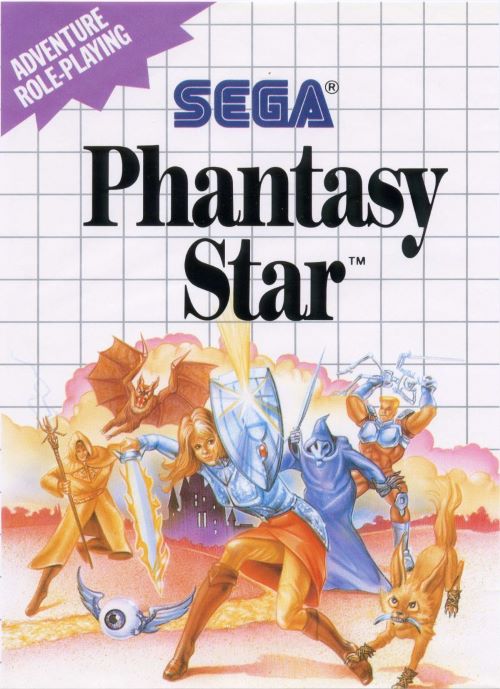
Phantasy Star Review

In the 1980s role-playing video game series were beginning to blossom. On the Nintendo Entertainment System, there was Final Fantasy and Dragon Warrior. For gamers who had the Sega Master System, there was one clear choice above the rest. In 1988, Phantasy Star was developed and published by Sega. Gamers were blown away by its innovative 3D dungeon-crawling and immersive setting that combined fantasy with space. We’re led by Alis, one of the first female protagonists in this Phantasy Star review!

Phantasy Star Plot:

From the manual:

“The time: Space Century 342. The place: the three planet Algol solar system located deep in the Andromeda galaxy.

Under the democratic rule of King Lassic, life was good as he provided everything his people could want. Space Travel had been discovered 200 years before, and deep space shuttles had allowed colonization of Motavia and Dezoris, the other worlds of the Algol Star System.

But slowly, over time, things began to change. It started with a new religion which was rumored to have come from another galaxy. The dark priests of this religion, never seen by any mortal, promised immortality to all who joined. You would live forever!

King Lassic was getting old. The idea of living forever appealed to him so he became the first to join. Then, he…changed. It started with the threatening suit of armor the priests made for him. The armor looked evil and corrupt, and that’s how Lassic began to rule his people. Outrageous taxes became a burden on everyone. Business on all three planets shut down, and entire towns fell into decay. There was no way for the people to make any money.

As time passed and the people suffered, horrible creatures and monsters began to stalk all three worlds. When the dead came back to life, the people feared the worst and guessed the truth. Through black magic, Lassic had become an evil tyrant.

But where there is evil there is also always good. Brave individuals began to rally in secret against Lassic. But his Robotcops were ruthless in hunting out these defenders of the people. One was Nero, a spaceport worker in Camineet, the central town on Palma. Long ago, his father had disappeared trying to learn of Lassic’s evil secrets. Now, the Robotcops had crushed Nero as well. Before he died, he passed on his short sword and his quest to his sister, Alis. He also told her to find a brave fighter named Odin.

Alis raised the sword to the sky and vowed that Nero’s death would not go unavenged!”

First, I want to comment on how incredibly in-depth this story is. There is mention of taxes, backstories for characters who aren’t even shown in the game, and the motive for the king turning evil. RPGs are known for their well-thought-out stories, but it’s incredible to see one this detailed in the early era of video games. This Phantasy Star review is scoring tons of points just for the lore that is presented to the gamer before they even turn the console on.

As the manual states, Alis picks up after Nero’s death, and you are even treated to a few dialogue scenes during his death. Alis has an incredible journey in front of her, and she is only 15. She starts to gather her faithful companions. After finding a rare item, Alis trades it to a merchant who gives her a feline companion named Myua. Together, they find the warrior Odin who had been turned into stone by the monster Medusa. They revive him with a magical remedy and set off together. The last piece of the puzzle is Noah, a powerful mage who refuses to help until Alis provides proof that the Governor of Motavia requests him. The four of them train together completing quests that include rebuilding a space shuttle and finding a robot captain to pilot it.

The four warriors confront Lassic and kill him but it’s determined that his body was under control by a dark force that was summoned by black magic. This force is known as Dark Falz, and it escapes back to Motavia and tries to invade the Governor’s body. Alis, Myua, Odin, and Noah arrive in time to defeat Dark Falz and rescue the land from the corrupt nature of this being.

Phantasy Star Gameplay:

During my Phantasy Star review, I was “wowed” by many different elements of the gameplay that I didn’t expect for a game released in 1988. What stands out immediately is the 3D dungeon crawling. Almost half the game is spent in dungeons finding required items, people, or leveling grinding. These dungeons are presented in a 3D nature not seen in video games, but the best part is that Phantasy Star pulls it off beautifully. Walking along the corridors is a smooth motion that immerses you into the environment and truly makes you believe that you’re exploring a dungeon or maze.

Phantasy Star has similar elements to combat as other RPGs like magic and attack power. I customized my armor and weapons during my Phantasy Star review and learned new spells while leveling up. You can check your experience points by visiting churches in towns to see how much more you need to fight wild monsters to grow. Like most RPGs of this time, I needed a walkthrough during my Phantasy Star review. This is nothing against the game, just I don’t have all the time in the world to RPGs all day long but if you do, by all means, explore the world of Phantasy Star on your own. The galaxy of Phantasy Star is divided into three worlds that you can travel between with a space shuttle. Each world has a few towns in it with dungeons and is quite large. Powerful wild creatures roam the world in random encounters so come prepared to battle whenever you venture outside of a town.

If one of your characters dies during a battle, they actually die and will need to be resurrected via a church which gave me a chuckle. I feel that Nintendo would never have this on their consoles. During my Phantasy Star review, I’d say the difficulty was a fine line. On one hand, you can save the game whenever which is terrific. On the other, without a guide or dungeon map, you could get lost for hours or not know where you should travel to next. I didn’t encounter any battles that were really challenging but I also level grinded a ton in preparation.

Battles are presented in the first-person view and all attacks have animations. Enemies will move or shake depending on how they attack. It’s a great touch to add to the battles and made them more entertaining.
Alis was my main brawler. She was strong with physical attacks. Odin was versatile but I mainly used him with ranged attacks with various guns. Myua was weak at first but after finding the best equipment for the little creature, he leveled up nicely and became very strong with his claw attacks. Noah comes as close to a healer as there is in the game. He had weak physical attacks but his magic was overpowering and disposed of many enemies.

Like other RPGs, the difficulty depends on how well you’ve leveled up your team. There are a few boss fights but I didn’t struggle with them during my Phantasy Star review. There were enough of them however to keep the game interesting and keep your team on their toes as they explored the land. Finally, the end credits were awesome. It was the final touch to Phantasy Star that puts it above other RPGs of the time. The credits are scribbled onto the dungeon walls as a camera pans around exploring. It was a neat trick and one that gave gamers one last treat before turning the game off.

Memories:
I first played Phantasy Star during college on what I believe was Spring Break. It was my first time experiencing the adventure and I was blown away by what the Sega Master System could do. It was almost a decade later that I completed my Phantasy Star review but I didn’t recall how long the game was. It took me longer to complete (about two weeks) so I was a bit thrown off by that. Regardless of the length, it’s a fantastic game.

Phantasy Star Review Score:

Phantasy Star introduced 3D dungeon crawling to the RPG genre while giving the Sega Master System a must-own game that Nintendo didn’t have. The exploration is challenging, and you’ll sink your teeth into this space fantasy for quite some time, but it’s all worth it as the gameplay and characters come together in an immersive experience. Phantasy Star ignited a great series that has seen many releases since the original.

Phantasy Star scores a 9.5 out of 10.

What would you write in your Phantasy Star review? Who was your favorite character? What was the first role-playing game that you had? Which part or dungeon gave you the toughest challenge? Let me know your thoughts and comments, I’d love to read them.
GripShift Review

Do you like puzzles? Do you like platforming? Do you like driving? Do you like action? Then I have the perfect game for you that combines all four of those genres and even advertises that it does! Released in 2005 for the PlayStation Portable, GripShift was developed by Sidhe and published by Red Mile Entertainment and Platform Publishing. Let’s get behind the wheel in this bizarre mix of gameplay for this GripShift review.

GripShift Plot:

This is one of the rare games in my collection of video games that doesn’t have much of a plot or story. During my GripShift review I didn’t encounter a shred of story so let’s head to the gameplay.

GripShift Gameplay:

My GripShift review of the gameplay will revolve around the four different genres that the game advertises with a bonus section because I found it to be the best part of the game. So what is GripShift? Well, that’s a loaded question but it’s a combination of mini-games and puzzles where you take control of a car. Racing, token collecting, and timed platforming all are at the forefront of GripShift. Starting with the “puzzle” section in this GripShift review, you’ll be tasked with driving your car on different tracks collecting stars, and making it to the finish line under a time goal. The puzzle aspect comes with figuring out which stars to collect first before turning down the other roads to finish the course. There’s some strategy that goes into completing these tracks with finding shortcuts and determining the best route.

The platforming part of my GripShift review is probably the most difficult part of the game. The courses that you race on and collect stars on are occasionally on different heights. Racing toward a jump boost will launch your car in the air but you’ll need to carefully hit the nitro boost or slam on the brakes to land on the next platform. There are also moving platforms that shift all the time. These can best be completed by hitting the nitro boost to zoom across all of them before they shift again. It’s a fun feeling when everything works out well but it rarely does and leads to frustrating replays of the same course over and over.

My racing aspect to my GripShift review is a fun one. When you aren’t collecting stars in twisting courses, you’re racing on them against other cars. These races don’t last long. Most of them were only about a minute long which makes replaying them until you win doable. Steering is always a bit difficult in GripShift as the car takes a while to get going but to help you during your races are little perks like rockets, shields, and TNT boxes. Don’t expect any in-depth race tracks or sophisticated environments. These races remind me of hot-wheel tracks with the loops and jumps.

So where does the “action” part come in for my GripShift review? Well, I believe the action is part of the racing where you can shoot missiles and drop TNT boxes for your opponents to crash into. You’ll fall off the track a million times whether you’re collecting the stars or racing. It’s not a matter of if but when. Luckily your car reappears pretty quickly and the whole game acts as a trial and error process to completing levels. This is okay if you have the patience. I was able to complete many levels during my GripShift review but it wasn’t all fun. It felt like I was forcing myself to keep replaying these courses and levels I didn’t want to play. You score points and medals off of your performance and with that, you unlock more courses or game modes. This is too bad because some of the best parts about GripShift are locked behind performance-based rewards.

The mini-games that I unlocked were plenty of fun. Penguin bowling was entertaining as you raced your car down tracks to crash into penguins set up as bowling pins. There were other games like pool but I couldn’t unlock it. With over 100 levels to race and collect stars on, it would take a very skilled and dedicated player to learn how to complete each course. Think of GripShift as a burst of 60 seconds of fun at a time or 60 seconds of disappointment. I’m sure readers who have had one-night stands know exactly the feeling.

What GripShift does very well is the music and characters. I could tell that much love went into the soundtrack to this game with all the unique and original songs. I was bobbing my head and tapping my fingers on the PSP as I raced along to the beats. The other great thing from my GripShift review was how ridiculous the characters were. These were the most stereotypical douchey people from the early 2000s and I loved it. Think of the frat guy with spiked hair and a popped collar with a visor and sunglasses. These are the types of racers you can choose from and the women were just as bad. It was great and definitely made me laugh when cycling through my options. The menu was filled with sound effects that were straight from the early 2000s complete with record scratches and immature noises.

Memories:
I purchased GripShift brand new from eBay. I didn’t know what to expect but I sure was excited to play it after being hit with the soundtrack and character options. My excitement dwindled after I replayed stage after stage to complete it and unlock more stages that were just as challenging.

GripShift Review Score:

GripShift is a game designed for people with patience to play stages over and over until you get it right and will punish you by keeping the fun parts of the game locked until you complete the hard stuff. It has a wonderful soundtrack and some great characters but unless you are a master of platforming and control, GripShift is better left on the shelf. You may have fun with it on a plane or car ride but if you’re looking for a PSP game to play all weekend, this isn’t it.

GripShift scores a 6.2 out of 10.

What would you write in your GripShift review? What was your favorite game mode? Were you able to unlock all of the mini-games? Can you think of any other games that are similar to it? Let me know your thoughts and comments, I’d love to read them.

Tekken Review

The original PlayStation was released in September of 1995 for the North American audience. Just two months later, Tekken was released on November 8th. The 3D fighting game was developed and published by Namco and became a massive early hit for owners of the PS1. Today, Tekken is still going strong with seven releases in the main series as well as a few spin-offs. We look past the deep ravine and seek revenge against Heihachi in this Tekken review.

Tekken Plot:

Tekken’s story revolves around a fighting tournament called The King of the Iron Fists. Many fighters have competed it in but it’s now narrowing down to the final few. The reward for winning this tournament is a fight against Heihachi Mishima, the CEO of a massive financial group called the Mishima Zaibatsu. Defeating Heihachi will earn the winning fighter a massive payout.

Fighters from all over the world compete in the tournament hoping to earn the money or for other personal reasons. Let’s take a look at the roster of fighters that are available in the first Tekken.

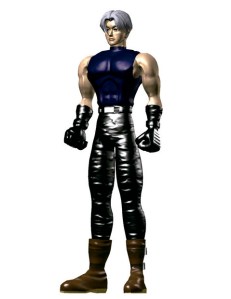
Kazuya Tekken 1
Kazuya in both outfits.

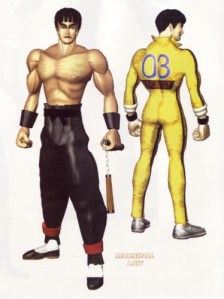
Kazuya Mishima – He’s the biological son of Heihachi. When he was five years old, Heihachi took him to a ravine and threw him off the ledge not believing he was strong enough to carry on the Mishima legacy. He survived the fall. Barely. But it left him with a huge scar across his chest and since then he’s worked to find a way of revenge against his father. Kazuya doesn’t care about the money but wants his father dead so he enters the tournament in hopes of fighting his father.

Marshall Law Tekken 1
Marshall Law

Marshall Law – An expert in mixed martial arts, Law dreams of opening up his own dojo to teach others the love of MMA. He currently works at a Chinese restaurant as a cook before entering The King of Iron Fists Tournament. Set on becoming famous for his martial arts talent, Law sets out to win the tournament and claim the prize.

Paul Tekken 1
Paul Phoenix – Not Vanilla Ice

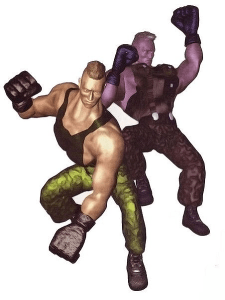
Paul Phoenix – An American fighter who wants to prove himself to others, Paul enters The King of the Iron Fists Tournament. He believes his rival is Kazuya and wants to prove it by defeating him in the tournament. Kazuya and Paul once fought to a draw, and Paul wants to determine a clear winner this time around.

Nina Tekken 1
Nina

Nina Williams – She’s a deadly assassin and her next target is Heichaci. It’s unclear who is behind the hit on Heichaci but it doesn’t matter to Nina who sees the tournament as a job. She must fight her way to the top and kill her target.

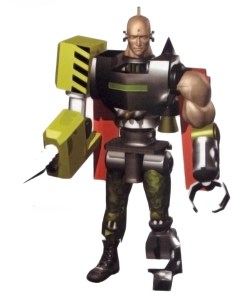
Jack Tekken 1
Jack

Jack – He’s not human, but instead a military-made killing machine developed by Russia. After hearing about the rise of the Mishima Group, Russia was worried about Heichaci overtaking control of the world. The country decides to enter Jack into the tournament as they believe it’s the only way to stop Heichaci from ruling the Earth.

King Tekken 1
King

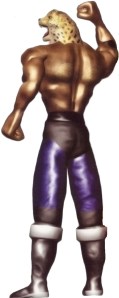
King – This masked wrestler has a soft spot for children and helps run an orphanage when he isn’t wrestling. When inside the ring, King is an unstoppable force with a mean streak. He enters the tournament in hopes of raising money for his orphanage to support his little orphans.

Michelle Tekken 1
Michelle

Michelle Chang – The daughter of a Native American woman and a Chinese man, Michelle is tangled up in Heichaci’s business after she’s forced by him to hunt Native American treasure in the deserts. After turning 18, she learns that her father has been killed by Heichaci and enters the tournament to seek revenge on him.

Yoshimitsu Tekken 1
Yoshimitsu

Yoshimitsu – An alien ninja from Space, Yoshimitsu has established himself as the leader of an honorary thieves guild who steals from the corrupt rich and gives to the poor. With the Mishima Group full of corruption, Yoshimitsu sets out to steal money from the tournament and other participants like Ganryu, a criminal sumo wrestler.

Ganryu Tekken 1
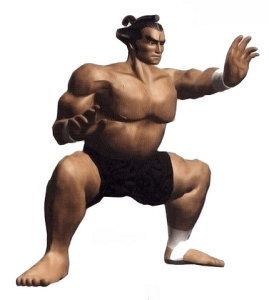
Ganryu

Ganryu – He was the youngest sumo wrestler in history to win the championship but was stripped of it due to his dishonorable dealings outside of the ring. Ganryu surrounds himself with criminals and illegal activities as he causes disruptions outside of the ring. He sets out to prove his strength again and enters the tournament.

Anna Tekken 1
Anna

Anna Williams – She’s Nina’s younger sister and is considered another assassin. Although their father taught them both deadly assassin techniques, Anna feels that Nina received the majority of their father’s affection. She also never wanted to become an assassin which was forced upon her by their father. She enters the tournament to prove that she is the better fighter and take revenge on Nina who received their father’s love instead of her.

Wang Tekken 1
Wang

Wang – He’s an elderly Chinese man who works as a merchant for the Mishima Group. Having befriended Heihachi’s father, he happily worked for them but when Heihachi took over the group he felt the tone of the company shift. He enters the tournament to find out Heihachi’s true intentions.

Prototype Jack - Tekken 1
Prototype Jack

P. Jack – Prototype Jack was just a step in the overall process of completing the real Jack that Russia developed into a killing machine. P Jack was built purely for power so he can overwhelm others easily but lacks the other traits that Jack was finished with. Heihachi steals P Jack and enters him into the tournament to protect him from Jack.

Armor King Tekken 1
Armor King

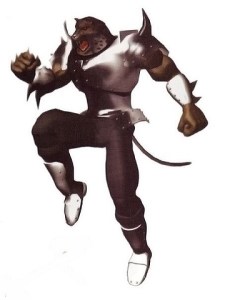
Armor King – He was a friendly rival to King who had his eye accidentally permanently scarred from a match against King. This injury caused Armor King to spiral out of the professional wrestling ranks while King took the spotlight. He enters the tournament to seek revenge on King for blinding him and stealing his championship.

Kuma Tekken 1
Kuma

Kuma – This large bear was originally an abandoned cub in the forests of the Mishima estate. Heihachi found him and took him in. Kuma grew large and was very well trained personally by Heihachi who began to teach him commands and fighting techniques. Kuma enters the tournament to protect his master.

Kunimitsu Tekken 1
Kunimitsu

Kunimitsu – She’s a former member of Yoshimitsu’s thieves guild but has since been thrown out after stealing from the rich to benefit her personal gain. She’s since gone rogue stealing for herself. With her eyes set on the money prize, she enters the tournament.

Lee Tekken 1
Lee

Lee – When his parents died when he was a young boy, he survived by fending for himself on the streets. His ruthless nature caught the attention of Heihachi who adopted him and raised him as his own son. He was trained in MMA and has since been fighting in underground criminal tournaments and earned the nickname of the “Silver-Haired Devil”. Lee and Kazuya have become fierce rivals with hatred for each other. Entering the tournament, Lee seeks out Kazuya.

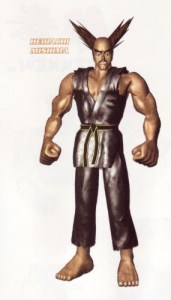
Heihachi

Heihachi Mishima – He runs the Mishima Group, the largest military and financial group in the world. He’s ruthless and wants to take over the world so he sets up The King of Iron Fists Tournament with the hopes of gathering the strongest soldiers in the world for his personal command. With a hefty money prize and the promise of fighting the winner, Heihachi awaits the winner of the tournament.

Those are the character descriptions for this Tekken review, but for the real story of the first game, each character has their own ending as if they won. In the canon version of Tekken, Kazuya wins the tournament and fights his father upon the same ravine he was thrown off as a child. Defeating his father in hand-to-hand combat, Kazuya takes his father’s beaten body and throws it off the cliff as he was when he was a child. Now that you know the plot for this Tekken review, let’s just to the gameplay!

Tekken Gameplay:

Visually, Tekken is very impressive for such an early PlayStation game. This was released only two months into the life cycle of the PS1 in 1995. That’s pretty incredible that gamers were able to see this on their screens and realize the next generation of video games were here.

Tekken rolls out a large roster of fighters with an interesting backstory to tag onto them. The fighters feel unique from the small women fighters who are quick and agile to the giants with large reaches like Kuma and Jack. There’s a fighter for everyone, and during my Tekken review, that fighter was Armor King. My go-to move is kicking the shin, and he had a move that results in three kicks to the shin that stuns your opponent. If you are lucky, you can continually stun them and drain their health bar through that.

I’ve fully admitted I’m not good at fighting games. I had to cheat my way through Mortal Kombat and I always turn down the difficulty when I played the Dead or Alive series. Tekken was no different. I played on normal and made it to Heihachi but never defeated him. It wasn’t until I turned the game on easy that I was able to defeat him with each character and even that was a bit challenging. Man, I really suck at fighting games, but I still had fun during my Tekken review.

There are 11 different areas to fight in. All of them are based in real locations around the world. Some fighting games have “ring outs” but Tekken didn’t. You fight hand-to-hand combat without weapons excluding Yoshimitsu who has a blade although he really doesn’t use it. Some fighting games are intimidating to play with their robust and advanced buttons to press to perform combos but I found during my Tekken review that I didn’t struggle too much pulling off fun and unique attack and throws. When pressing two specific buttons at once, you could perform a special attack for each character. Characters have two special attacks each and they are easy to learn. One of my favorite attacks that I nicknamed the “Flying 69” was performed by Yoshimitsu who grabs the opponent spins them around so they are in the 69 position and then slams them to the ground. I’m sure that’s not what the move is actually called, but it made me laugh to perform it.

Making your way through the tournament you’ll fight nine opponents with the last two being “special”. Everyone fights Heihachi at the end unless you’re him and then everyone has a rival before Heihachi. During my Tekken review sometimes I struggled against Heihachi, sometimes I didn’t. I fought well with Nina, Marshall, and Armor King but struggled with Ganryu, Yoshimitsu, and Kuzaya.

Tekken could use a little help in the musical department as some of the songs loop too much but other than that I enjoyed the interesting sound effects. Marshall Law made some hilarious screaming noises, and Jack had a nice mechanical touch to all of his sound effects. Sure, the cut scenes and character animations can be tough to watch now, but back then I’m sure it was cutting edge. I was happy to watch all the cut scenes during my Tekken review but was disappointed only the first eight characters had the ending scene. You’ll unlock another nine fighters but they didn’t have ending sequences like the others. That was a bummer but I understand that it probably took a ton of work to put the ending scenes for the original fighters.

Memories:
I played Tekken 2 for years with my childhood friend Darren at his house. We’d spend hours fighting Devil Kazuya and I first learned the characters and my love for Armor King then. I played Tekken 3 briefly with another childhood friend but not to the extent of Tekken 2. A few weeks ago I was retro video game shopping and to my surprise came across the original Tekken in mint condition for a great price. I picked it up and my Tekken review was the first time I played it. I had lots of fun with it and was surprised by how well the gameplay held up.

Tekken Review Score:

Tekken is a fantastic game for the PlayStation and it’s easy to see why it spawned a huge following and successful franchise that continues to this day. The characters are likable and there’s enough variety for everyone. Learning how to fight isn’t too intimidating and having easy throws that look impressive make it fun to learn new characters. There’s plenty to like about this game but I wish they would have included a little more music and some ending sequences for all the characters. Still, it’s a fantastic game that came out very early in the PS1 life-cycle.

Tekken scores an 8.5 out of 10.

What would you write in your Tekken review? Who was your favorite fighter? How much did you struggle with Heihachi? What was your favorite ending video? Let me know your thoughts and comments, I’d love to read them.

Banjo Kazooie Review

Video game developer Rare was no stranger to creating massively successful games. The Donkey Kong series was cooling off when Rare shifted its efforts to a new series. Released in 1998 for the Nintendo 64, Banjo Kazooie was developed by Rare and published by Nintendo. This explorative platforming collect-a-thon combined many different elements into a masterpiece that is rarely duplicated today. It’s time to rescue Tooty in this Banjo Kazooie Review.

Banjo Kazooie Plot:

In the land of Spiral Mountain lives a bear named Banjo and his bird pal Kazooie. Banjo has his own house but for some reason, it appears that Kazooie has made her nest in Banjo’s backpack, but for whatever reason, it works. Spiral Mountain is also home to Grunty the Witch, a fat green hag who has self-confidence issues. (I would too if I looked like her) She decides that Banjo’s younger sister Tooty is more beautiful than her and plans to kidnap the young blonde-headed bear.

Grunty has created a machine that will transfer Tooty’s “beauty” to her and send her ugliness to Tooty. After a successful kid(bear)napping, Banjo, and Kazooie set off to rescue Tooty from the evil and ugly witch. Together they collect hundreds of musical notes and puzzle pieces to unlock different portions of Spiral Mountain that were sealed by Grunty’s magic.

Banjo and Kazooie make it to the top of Spiral Mountain where they are entered into a game show hosted by Grunty. After successfully answering trivia questions and surviving dangerous tasks, Banjo and Kazooie make it to the end of the game show board where they are presented with their prize of Tooty. As the pair collects their “prize”, Grunty runs out the back door.

Banjo Kazooie Gameplay:

In this Banjo Kazooie review, there are many different aspects of gameplay. This N64 exclusive was brilliantly put together. The first portion of this Banjo Kazooie review that I was to discuss is the music. Typically, I don’t notice music or sound effects unless they are great. It’s just not something that I pick up on, so when a game grabs my attention with the music or sounds, you know it’s good.

Banjo Kazooie intertwines the ongoing theme music throughout your playthrough but shifts the tone and pitch depending on your environment. In the outer world of climbing Spiral Mountain, the theme will play continuously. If you enter the water swim underneath, the pitch changes to an underwater effect. When flying throughout the game if you fly too high the music grows quiet until it disappears completely. It’s not just the volume that changes but the tune itself. When you are on a snowy mountain, the song changes to a Christmas theme, the same goes for when you enter an Egyptian desert. It’s fun to listen to the notes as they change depending on where you go. This attention to detail makes great games phenomenal.

This Banjo Kazooie review is off to a great start but how does the platforming score? Banjo and Kazooie are two different characters but they are one in the form of a perfect platforming element. Banjo may be bigger and Kazooie lives in his backpack but one isn’t greater than the other. If anything, I’d argue that Kazooie is more useful as she can swim, fly, climb up tall hills, and sprint. Banjo may be the transport, but Kazooie has all the bells and whistles.

There were nine different worlds to explore during my Banjo Kazooie review. Each had a unique theme and each was sealed away by magic. World themes included snow, deserts, forests, swamps, underwater, and other elements like beaches. Within these worlds, you’ll explore rather than battle enemies. You’re looking for puzzle pieces that can be found or awarded for completing tasks or mini-games. These tasks can be anything from memorizing the order of singing turtles, stopping monsters from eating happy Christmas lights, to freeing a huge mechanical whale. All of these are fun challenges, but they are challenging. I couldn’t complete all of these tasks but each one of them was enjoyable. As I mentioned earlier in this Banjo Kazooie review, you explore the worlds and look for puzzle pieces rather than fight the enemies that inhabit the area. You can fight them but the majority of the time they are better left alone.

Exploring is a huge aspect in Banjo Kazooie and that goes for both the world realms and the outer world on Spiral Mountain. You’ll have to seek out puzzle platforms to stick the pieces on the board to complete the picture. When the picture is completed you can then enter that world. Everything from the musical elements, challenging mini-games, and unique combo of Banjo and Kazooie help craft a near-masterpiece. It’s close, but there is one nagging issue that I kept having to deal with during my Banjo Kazooie review. Camera angles can be frustrating when you need to carefully walk a platform or jump onto a floating raft. It’s a small issue but it can lead to a few frustrating instances of missing a jump.

The final experience in my Banjo Kazooie review was facing off in a game show hosted by Grunty which came completely out of the left field. (that means out of nowhere for you non-sports fans) I was expecting to face off with Grunty but instead and not necessarily mad, I was treated to a board game. Landing on squares I had to relive my experience of playing the game. How well you paid attention to the characters and areas played a big role in how successful you were in making your way toward Grunty. Some squares had me guessing where a photo was taken, the voice of a character, and “interesting” facts about Grunty including a striptease she does. Players who ignored the details during their playthrough will suffer, especially if they land on the instant death squares if they get an answer wrong.

Memories:
Remember when large retail stores like Walmart or Meijer had video game kiosks? Well…they did. When I was a kid my parents would drop me off at these while they went shopping. One of these times Banjo Kazooie was featured and I happily played it. I was fairly young, perhaps seven or eight so I wasn’t very good but I had fun exploring the world.

Fast-forward many years later and I picked up Rare Replay. I was finally able to see for myself what the magic was all about and complete my Banjo Kazooie review.

Banjo Kazooie Review Score:

This was a rare experience (no pun intended) where all elements of a video game come together for an amazing experience. You’ll collect, explore, and platform your way around nine amazing worlds filled with secrets. Banjo Kazooie is an experience that everyone should have and one that still feels fresh over 20 years past its release. Aside from a few difficult camera angles, this game is near perfect.

Banjo Kazooie scores a 9.9 out of 10.

What would you write in your Banjo Kazooie review? What was your favorite world? Who did you play with more, Banjo or Kazooie? How did you fare in Grunty’s game show? Let me know your thoughts and comments, I’d love to read them.